
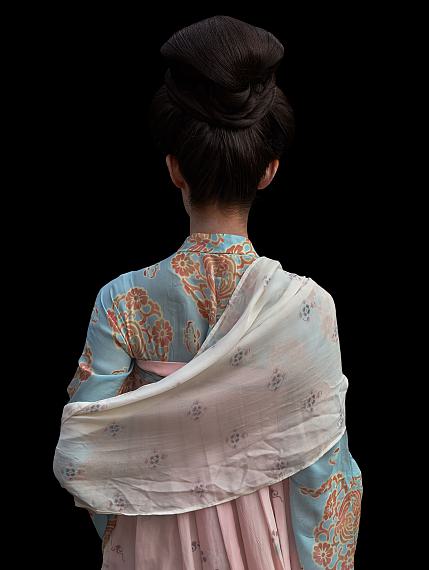
CHN 02, 2017
Hand-signed, dated, and numbered on verso of Dibond plate
Pigment print on Hahnemühle Ultrasmooth, mounted on Dibond
88 x 66 cm | 34 5/8 x 26 in
Edition of 6 plus 2 APs
Corina Gertz »
The Averted Portrait—The Quiet Language of Textiles
Das abgewandte Porträt – Die stille Sprache der Stoffe
Exhibition: 29 Jan – 17 Apr 2026
Sun 1 Mar

Ira Stehmann Fine Art
Prinzregentenstr. 78
81675 München
+49-(0)171 264 12 93
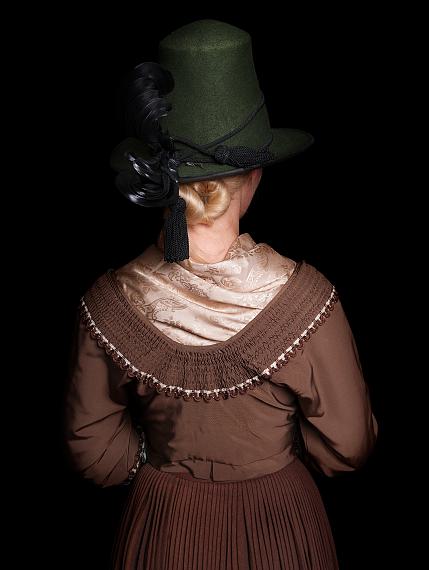
DE 02, 2010
Hand-signed, dated, and numbered on verso of Dibond plate
Pigment print on Hahnemühle Ultrasmooth, mounted on Dibond
88 x 66 cm | 34 5/8 x 26 in
Edition of 6 plus 2 APs
Corina Gertz
"The Averted Portrait—The Quiet Language of Textiles"
Exhibition: 29 January – 31 March 2026
Ira Stehmann Fine Art is pleased to present the solo exhibition The Averted Portrait — The
Quiet Language of Textiles by the artist Corina Gertz.
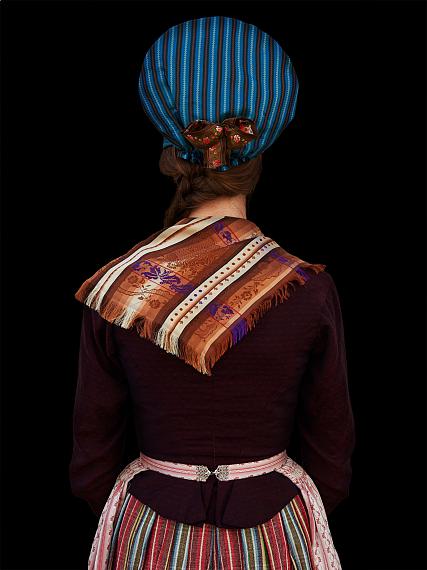
In her long-term project The Averted Portrait, Corina Gertz develops a consciously
reimagined form of portraiture that departs from classical conventions. Her photographs
show women in traditional clothing, mostly seen from behind or turned slightly away, so that
their facial features remain hidden. The focus shifts away from the individual toward cultural
identity, bodily presence and the language of clothing. Gertz does not understand the portrait
as a psychological depiction, but as a space in which lived history, belonging and cultural
practices become visible. Through this deliberate staging, clothing itself becomes the bearer
of history, identity and social meaning; skin colour, facial features and bodily proportions
recede, revealing a cultural memory inscribed in fabrics, patterns and craftsmanship.
Many of the garments depicted are heirlooms, rich in history, tradition and familial meaning.
They embody knowledge passed down through generations and reflect social, aesthetic and
socio-political narratives. By concealing the face, Gertz frees her subjects from the
expectation to express personality through facial expression. Instead, she invites viewers to
immerse themselves in the depth of textures, embroideries and forms. In this way, a sensitive
portrait of collective identity emerges — between personal belonging and social context.
Corina Gertz’s artistic approach is grounded in respect, deceleration and encounter. She does
not work as a distant observer, but in close relationship with the people and their cultural
contexts. Through the serial structure of the work, a visual archive is created that goes far
beyond a documentary collection: the visual language intensifies the garments’ presence as
expressions of cultural diversity while also pointing to their emotional and political
dimensions.
The exhibition presents a curated selection from this extensive project. A particular focus lies
on works from Germany and China, which reveal different forms of textile tradition and
cultural coding. In Germany, Gertz encounters traditional costumes often associated with
local pride as well as nostalgic projections; she removes their folkloristic connotations and
presents them as timeless expressions of a living culture. In China, the garments of various
ethnic groups carry coded meanings — concerning familial ties, stages of life or spiritual
affiliation. Colours, patterns and handcrafted structures appear like autonomous visual signs
embedded in a long tradition of textile craftsmanship.
The selection is complemented by individual works from Romania and Spain, which open up
further cultural perspectives. In Romania, a particular closeness between clothing, ritual and
familial heritage becomes visible: many blouses have been passed down through generations,
each seam sewn by the hands of mothers and grandmothers, turning the garment into a living
connection between past and present. The work from Spain points to other historical and
regional textile traditions and expands the geographical and cultural horizon of the exhibition.
Corina Gertz’s photographs make visible what is often overlooked or marginalised, creating
spaces for attentiveness, reflection and appreciation of cultural difference. They present
cultural identity not as a form of demarcation, but as a relational space — and as a foundation
for a pluralistic social coexistence.
Corina Gertz studied fashion design and created collections for international labels in
Düsseldorf, Hong Kong, Cape Town and London. From 2013 to 2017 she held teaching
positions at the Beijing University of Technology and was a visiting professor at Xijing
University in Xi’an, China. Since 2001, Gertz has explored clothing in her photographic
work as a form of non-verbal communication — as a sign of status and social position, group
affiliation, regional identity, religious denomination and official function.
She has been working on her series The Averted Portrait since 2010. Her works have been
shown in international museums and galleries, including Marta Herford, the Shanghai Art
Museum, the National Museum of Singapore, the Museo delle Culture del Mondo in Genoa,
and the White Box Art Center 798 in Beijing.
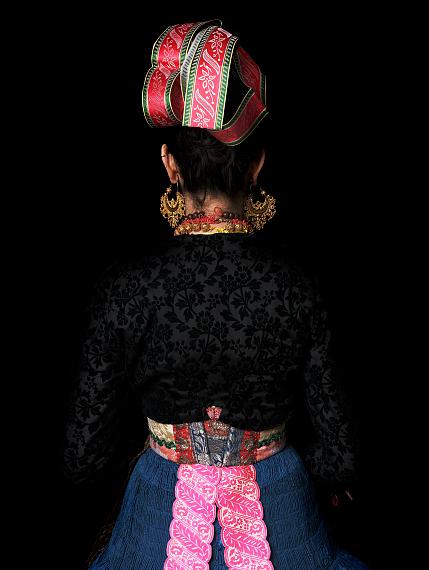
DE 29, 2022
Hand-signed, dated, and numbered on verso of Dibond plate
Pigment print on Hahnemühle Ultrasmooth, mounted on Dibond
88 x 66 cm | 34 5/8 x 26 in
Edition of 6 plus 2 APs
Corina Gertz "Das abgewandte Porträt – Die stille Sprache der Stoffe" Ausstellung: 29. Januar bis 31. März 2026
In ihrem Langzeitprojekt "Das abgewandte Porträt" entwickelt Corina Gertz eine bewusst neu gedachte
Form des Porträts, die sich von klassischen Vorstellungen löst. Ihre Fotografien zeigen Frauen in
traditioneller Kleidung, meist von hinten oder seitlich abgewandt, sodass die Gesichtszüge verborgen
bleiben. Nicht das Individuum, sondern kulturelle Identität, Körperhaltung und die Sprache der
Kleidung rücken in den Mittelpunkt. Gertz versteht das Porträt nicht als psychologisches Abbild,
sondern als einen Raum, in dem gelebte Geschichte, Zugehörigkeit und kulturelle Praktiken sichtbar
werden. Durch diese bewusste Inszenierung wird die Kleidung selbst zum Träger von Geschichte,
Identität und gesellschaftlicher Bedeutung; Hautfarbe, Gesicht und Körperproportionen treten zurück,
sichtbar wird ein kulturelles Gedächtnis, das sich in Stoffen, Mustern und Handwerk niederschlägt.
Viele der gezeigten Kleidungsstücke sind Erbstücke, reich an Geschichte, Tradition und familiären
Bedeutungen. Sie verkörpern über Generationen weitergegebenes Wissen und spiegeln soziale,
ästhetische und gesellschaftspolitische Erzählungen wider.
Indem Gertz das Gesicht verbirgt, befreit
sie ihre Modelle von der Erwartung, Persönlichkeit über Mimik darzustellen. Stattdessen lässt sie die
Betrachtenden in die Tiefe der Texturen, Stickereien und Formen eintauchen. So entsteht ein sensibles
Porträt kollektiver Identität — zwischen persönlicher Zugehörigkeit und gesellschaftlichem Kontext.
Die künstlerische Haltung von Corina Gertz basiert auf Respekt, Entschleunigung und Begegnung.
Sie arbeitet nicht als distanzierte Beobachterin, sondern in enger Beziehung zu den Menschen und
ihren kulturellen Kontexten. Durch die serielle Anlage der Arbeit entsteht ein visuelles Archiv, das
weit über eine dokumentarische Sammlung hinausgeht: Die Bildsprache verstärkt die Wirkung der
Gewänder als Ausdruck kultureller Vielfalt und verweist zugleich auf ihre emotionale wie politische
Dimension.
Die Ausstellung zeigt eine kuratierte Auswahl aus diesem umfassenden Projekt. Einen Schwerpunkt
bilden Arbeiten aus Deutschland und China, die unterschiedlichen Formen textiler Tradition und
kultureller Codierung sichtbar machen. In Deutschland begegnet Gertz Trachten, die häufig mit
lokalem Stolz, aber auch mit nostalgischen Projektionen verbunden sind; sie nimmt ihnen das
Folkloristische und zeigt sie als zeitlose Ausdrucksformen einer lebendigen Kultur. In China zeigen
die Gewänder verschiedener ethnischer Gruppen codierte Bedeutungen — über familiäre Bindungen,
Lebensphasen oder spirituelle Zugehörigkeiten. Farben, Muster und handgefertigte Strukturen
erscheinen hier wie autonome Bildzeichen, eingebettet in eine lange Tradition textilen Handwerks.
Ergänzt wird die Auswahl durch einzelne Arbeiten aus Rumänien und Spanien, die den Blick auf
weitere kulturelle Kontexte öffnen. In Rumänien zeigt sich eine besondere Nähe zwischen Kleidung,
Ritual und familiärem Erbe: Viele Blusen wurden über Generationen weitergegeben, jede Naht von
den Händen der Mütter und Großmütter gesetzt — wodurch die Kleidung selbst zur lebendigen
Verbindung zwischen Vergangenheit und Gegenwart wird. Die spanische Arbeit verweist auf andere
historische und regionale Textiltraditionen und erweitert den geografischen und kulturellen Horizont
der Ausstellung.
Corina Gertz’ Fotografien machen sichtbar, was häufig übersehen oder marginalisiert wird, und
schaffen Räume des Innehaltens, der Aufmerksamkeit und der Wertschätzung kultureller Differenz.
Sie zeigen kulturelle Identität nicht als Abgrenzung, sondern als Beziehungsraum — und als
Grundlage eines pluralen gesellschaftlichen Miteinanders.
Corina Gertz studierte Modedesign und entwarf Kollektionen für internationale Labels in Düsseldorf, Hongkong, Kapstadt und London. Von 2013 bis 2017 hatte sie Lehraufträge an der Beijing University of Technology und war Gastprofessorin an der Xijing University in Xi'an in China. Seit 2001 erforscht Gertz in ihren Fotografien Kleidung als non-verbale Kommunikation - Zeichen von Stand und Status, Gruppenzugehörigkeit, regionaler Identität, Konfession, offizieller Funktion.
An ihrer Serie "Das abgewandte Porträt" arbeitet sie seit 2010. Ihre Arbeiten wurden in internationalen Museen und Galerien ausgestellt wie im Marta Herford, Shanghai Art Museum, National Museum of Singapore, Museo delle Culture del Mondo, Genua, und White Box Art Center, 798, Peking.
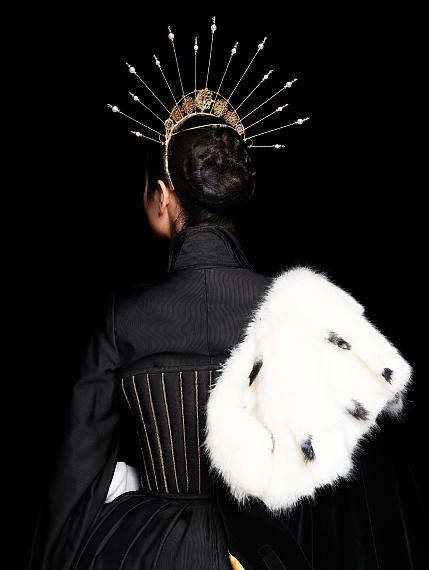
DOAR 11, 2022
Hand-signed, dated, and numbered on verso of Dibond plate
Pigment print on Hahnemühle Ultrasmooth, mounted on Dibond
88 x 66 cm | 34 5/8 x 26 in
Edition of 6 plus 2 APs
ESP 06, 2022
Hand-signed, dated, and numbered on verso of Dibond plate
Pigment print on Hahnemühle Ultrasmooth, mounted on Dibond
88 x 66 cm | 34 5/8 x 26 in
Edition of 6 plus 2 APs