Global Peace Photo Award 2025
Fereshteh Eslahi » Diego Ibarra Sánchez » Mahdi Vaghari » Ami Vitale » & others
Award:

GLOBAL PEACE PHOTO AWARD
Dumbagasse 9
2500 Baden
+43 (0)699-13583989
Global Peace Photo Award 2025
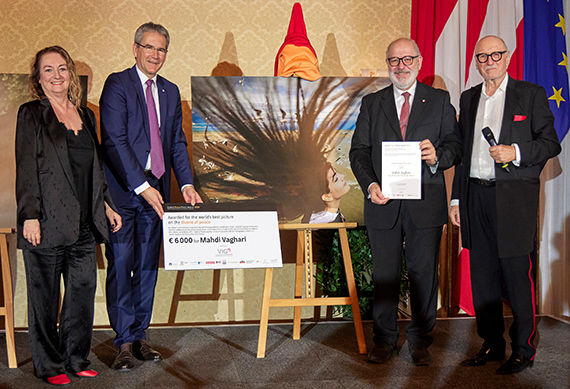
Mahdi Vaghari has been honoured at the Global Peace Photo Award for the ‘Peace Image of the Year 2025’.
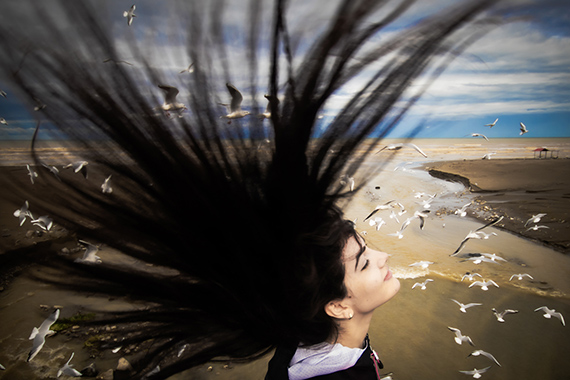
From 24,189 entries from 132 countries, the jury of the Global Peace Photo Award selected the work "No one can take my Soul” by Iranian photographic artist Mahdi Vaghari as the Peace Image of the Year 2025.
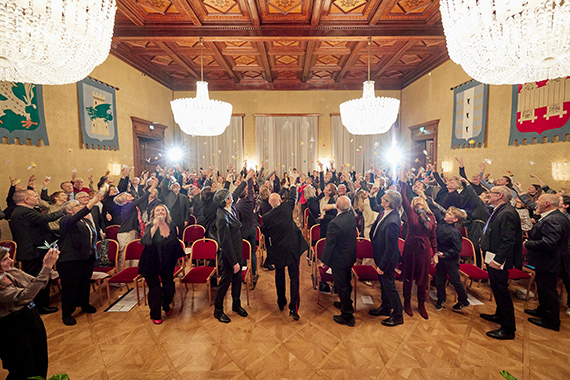
On 30 March 2026 the winners of the international Global Peace Photo Award photography competition were presented with the Alfred Fried Peace Medal for the thirteenth time.
In the presence of the Japanese Ambassador to Austria, Iwama Kiminori, the keynote address of the evening was delivered by Terumi Tanaka, Secretary-General of Nihon Hidankyo, a Japanese peace organisation which was awarded the Nobel Peace Prize in 2024. Nihon Hidankyo was founded by survivors of the atomic bombings of Hiroshima and Nagasaki and campaigns for international nuclear disarmament.
The award gala took place at the invitation of the Mayor of Vienna, Michael Ludwig – who was represented by Omar Al-Rawi, a member of the City Council and the Vienna Provincial Parliament – in the Wappensaal of Vienna City Hall, which was filled to capacity.
The winners of the Global Peace Photo Awards 2025
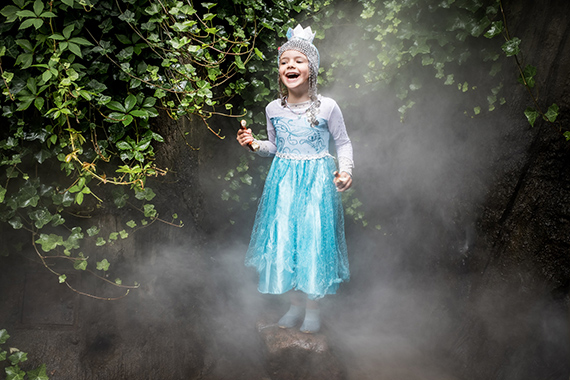
Children’s category: Noa Hagemann from Germany for "My Sister”
Single Image Category: Mahdi Vaghari from Iran for "No one can take my Soul”
Photo Series:
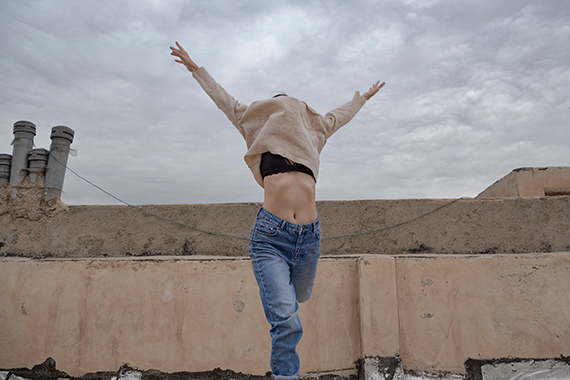
“But we were so strong”, Fereshteh Eslahi, Iran
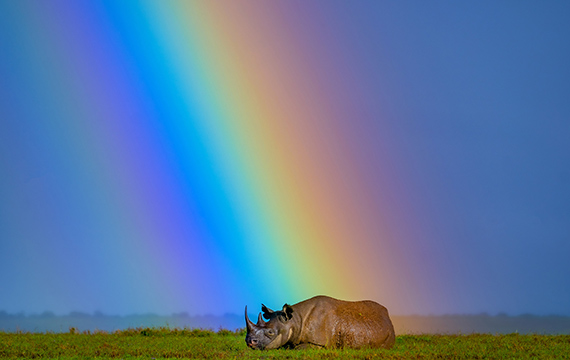
“Kenya’s Black Rhino Revival”, Ami Vitale, USA
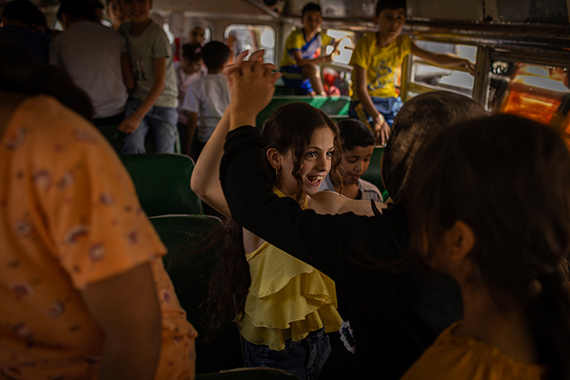
LBN: "On the roaring of the bus”, Diego Ibarra Sánchez, Spain / Libanon
In his welcoming address, Omar Al-Rawi, who attended on behalf of the Mayor of Vienna, Michael Ludwig, emphasised how important it is to provide a forum for peace in these times. Only through dialogue will we succeed in overcoming the current wars. Only liberal democracies, which are able to respond clearly to differing viewpoints without marginalising them, can provide the framework for this. The Global Peace Photo Award honours photographers who have used their lens to "put their finger on the wound”.
Peace Image of the Year 2025
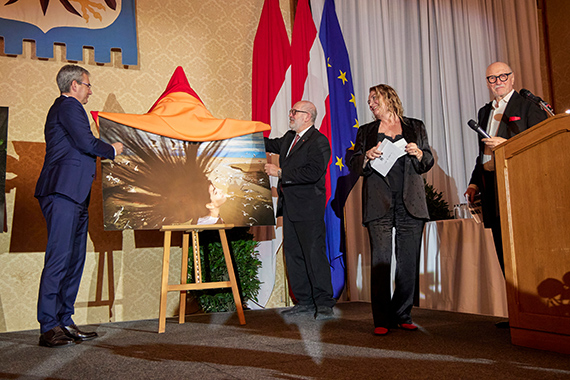
The main prize, the "Peace Image of the Year 2025”, worth 7,000 euros, went to the Iranian photographic artist Mahdi Vaghari for his image "No one can take my Soul”
No veiling, no hiding. No modesty, no sadness. Rather, pride in what a woman is not supposed to show, lest she provoke the men. A gust of wind has whipped the magnificent hair of this young Iranian woman into a wild crown. She is walking across a bridge, whilst a flock of birds flies over the nearby beach. Freedom on two levels.
An image of great power that actually – unlike so many photos – manages entirely without words. The mere fact that it was taken in Iran gives it, once again, a special significance. It was taken by a man who is not yet well known in our part of the world: Mahdi Vaghari, born in Iran in 1995, who began taking an interest in photography in 2003 and was taught by his father.
"I want to capture authentic emotions,” says Mahdi. And he does so in the hope of drawing attention to everything that could make the world a more beautiful place. And a more peaceful one. "Nobody,” he captioned his photo, as if the woman were speaking for herself, "can own my soul.”
This is how jury member Peter-Matthias Gaede summed up the merits of Mahdi Vaghari’s work in his laudatory speech.
Mahdi Vaghari was also honoured in the ‘Best Single Image’ category. The prize money of €1,000 was provided by the Austrian Photographische Gesellschaft (Photographic Society, PHG), the second-oldest photographic society in the world.
The Children’s Peace Image of the Year 2025
The prize for the best peace image in the children’s and youth category, "The Children’s Peace Image of the Year 2025”, worth 1,000 euros, was won by 8-year-old Noa Hagemann from Germany with his image "My Sister”.
It was taken in a zoo, and Lani, Noa’s five-year-old sister, stood like a little fairy-tale figure amongst the trees, gently enveloped in wisps of mist. Noa, who had just turned eight, photographed her spontaneously. This is worth noting, as it is not uncommon for the boy to position and direct his sister for a picture.
What does peace mean to Noa? "That everyone is happy,” he says, "that no one is arguing and there is no war in the world.”
The two main prizes were presented by Hartwig Löger, Chairman of the Board and CEO of the Vienna Insurance Group (VIG), which has supported the Global Peace Photo Award as its main sponsor for many years: "Peace is of the utmost importance. As individuals and as a company, we depend on a stable and peaceful environment to thrive. That is why the Vienna Insurance Group, which operates as an international insurance group in around 30 countries, has supported the Global Peace Photo Award from the very beginning. We have been promoting the children’s peace photo since its inception, and since 2022 we have also been the main sponsor of the entire award.”
Lois Lammerhuber, who initiated the Global Peace Photo Award together with his wife Silvia Lammerhuber and has organised it since the very beginning, reminded us that "peace is not the absence of war, but something I would describe as a ‘life well lived’. With all their creative and artistic passion, the photographers compose an ode to respect for the fragility of our world. They invoke the relationships between people and nature as a mission for a responsible life. With their talents, their vision and their perspectives, they depict the social and ecological challenges that must no longer be ignored. They captivate the eye with photographs that take root in the heart the moment they are seen, and encourage us to resist indifference and the prevailing populism. An appeal to the world that is firmly inscribed in the heart of our award.”
Werner Blach, Executive Director of UNICEF Austria, emphasised in his speech: "Although conflicts around the globe differ in cause and course, they share a common, harrowing reality: it is always the children who pay the highest price. Children who bear no blame whatsoever! They must be protected and urgently need peace! Children have rights – not someday, not perhaps – but always.”
Alfred Fried Peace Medals 2025
The other Alfred Fried Peace Medals 2025, each accompanied by prize money of €1,000, were awarded to:
Ami Vitale, USA: "Kenya’s Black Rhino Revival”
They have inhabited the African continent for 17 million years, but poaching has decimated their population by a staggering 96 per cent. Their downfall: in parts of Asia, a powder made from the two large, long horns on their skulls is still believed to have fever-reducing, detoxifying and even cancer-curing properties.
For the reportage honoured here, the American photographer Ami Vitale documented the complex relocation of 21 endangered black rhinos to the Loisaba Reserve in northern Kenya.
Ami Vitale, born in 1971, studied before deciding to become a photojournalist. Her reports have been published in GEO and National Geographic, among others. Vitale has won a number of the world’s most prestigious awards; the significance of her work is now compared to that of women such as Jane Goodall or Christiane Amanpour.
Fereshteh Eslahi, Iran: "But we were so strong”
In May 2025, the mullah regime’s attempt to tighten the headscarf requirement for women in the country still failed. Then, in October, came the news that in the capital Tehran alone, 80,000 newly recruited "morality police” were to enforce compliance with the Islamic dress code more rigorously.
And yet: right up until the start of the Israeli and US attack on Iran, the women’s uprising continued. But it was one that expressed itself peacefully. Merely the acceptance that femininity should not be regarded as a provocation and need not be concealed in public – but is nothing other than a self-evident human right.
This desire is courageous nonetheless. The dancer on the roof, her leap with arms outstretched, is an expression of hope to be able to free oneself from dictates of all kinds. This scene was captured by the Iranian photographer Fereshteh Eslahi, who studies the everyday lives of Iranian women through her camera.
Eslahi completed a master’s degree at the University of Tehran. She has been working for Iranian photo agencies since 2014 and has been a member of an Iranian press photographers’ association since 2017. In 2021, Eslahi was awarded a World Press Photo Award.
Diego Ibarra Sánchez, Spain: "LBN: On the roaring of the bus”
At the end of the Second World War, the term DP (Displaced Persons) was used to describe all those who found themselves outside their homeland; since then, there have been displaced persons in many countries around the world, including Lebanon, currently caused by Hezbollah’s attacks on Israel and Israel’s retaliatory strikes. In October 2024, there were around 94,000 people in southern Lebanon, including some 30,000 children.
To free girls and boys from the vortex of fear and terror, if only for a moment, the photographer Houssam Khatab has organised a colourful bus, the ‘Art Peace Bus’, driven by Syrian refugees, which takes the children of the city of Tyre to an old theatre palace, where they are to be entertained with various performances and workshops."Many of the children have lost everything,” says the actor and theatre director, Kassem Istambouli, "we are trying to break the cycle of war and offer the children art as a window to greater resilience.”
Spanish photographer Diego Ibarra Sánchez, born in 1982, who lives and works in Lebanon, travelled on the Peace Bus to photograph children in a moment of exuberance. As a photographer and documentary filmmaker, Sánchez says he wants to achieve more than simply capturing events. Above all, he wants to encourage reflection on the state of our world. He has documented this world in places such as Latin America, African countries, Afghanistan, Pakistan and Lebanon. His work has appeared in the New York Times, Der Spiegel and the NZZ, and is featured in numerous exhibitions.
About the Global Peace Photo Award 2025
A total of 24,189 images from 132 countries were submitted to the Global Peace Photo Award 2025. The majority of entries came from Iran, India, Germany, Russia and the USA. The entries were judged by a high-calibre international jury. See: globalpeacephotoaward.org/jury
The Global Peace Photo Award is organised in cooperation with Edition Lammerhuber, the Photographic Society (PHG), UNESCO, the Austrian Parliament, the Association of Parliamentary Editors, the International Press Institute (IPI), the World Press Photo Foundation, POY LATAM, LensCulture, APA – Austria Press Agency, the German Photographic Society (DGPh), UNICEF Austria and the Vienna Insurance Group.
Press materials (winners’ photos, jury statements, keynote speech, photos from the event) available for download: press.lammerhuber.at/gppa2025
Global Peace Photo Award 2025
Mahdi Vaghari beim Global Peace Photo Award 2025 für das "Friedensbild des Jahres 2025" ausgezeichnet.
Die Jury des Global Peace Photo Awards wählte aus 24.189 Einreichungen aus 132 Ländern die Arbeit "No one can take my Soul” des iranischen Fotokünstlers Mahdi Vaghari zum Friedensbild des Jahres 2025.
Am 30. März 2026 wurden zum dreizehnten Mal die Gewinner:innen des internationalen Fotowettbewerbs Global Peace Photo Award mit der Alfred-Fried-Friedensmedaille ausgezeichnet.
In Anwesenheit des japanischen Botschafters in Österreich Iwama Kiminori wurde die Keynote des Abends von Terumi Tanaka gehalten, dem Generalsekretär von Nihon Hidankyo, eine japanische Friedensorganisation, die mit dem Friedensnobelpreis 2024 ausgezeichnet wurde. Nihon Hidankyo wurde von Überlebenden der Atombombenangriffe auf Hiroshima und Nagasaki gegründet und setzt sich für die internationale nukleare Abrüstung ein.
Die Award Gala fand auf Einladung des Bürgermeisters der Stadt Wien Michael Ludwig, der vom Gemeinderat und Abgeordneten zum Wiener Landtag Omar Al-Rawi vertreten wurde, im bis zum letzten Platz gefüllten Wappensaal des Wiener Rathauses statt.
Die Preisträger:innen des Global Peace Photo Awards 2025
Kinderkategorie: Noa Hagemann aus Deutschland für "Meine Schwester"
Kategorie Einzelbilder: Mahdi Vaghari aus dem Iran für "No one can take my Soul”
Kategorie Bildserien:
“But we were so strong”, Fereshteh Eslahi, Iran
“Kenya’s Black Rhino Revival”, Ami Vitale, USA
LBN: "On the roaring of the bus”, Diego Ibarra Sánchez, Spain / Libanon
In seiner Begrüßung betonte Omar Al-Rawi, der in Vertretung des Bürgermeisters der Stadt Wien Michael Ludwig gekommen war, wie wichtig es ist, in diesen Zeiten dem Frieden ein Forum zu bieten. Nur im Dialog werde es gelingen, die gegenwärtigen Kriege zu überwinden. Den Rahmen dafür können nur liberale Demokratien bilden, die die unterschiedlichen Standpunkte ohne auszugrenzen mit Klarheit zu beantworten wissen. Mit dem Global Peace Photo Award werden Fotograf:innen ausgezeichnet, die mit der Linse "den Finger in die Wunde gelegt haben".
Peace Image of the Year 2025
Der mit 7.000 Euro dotierte Hauptpreis "Peace Image of the Year 2025" ging an den iranischen Fotokünstler Mahdi Vaghari für sein Bild "No one can take my Soul”
Keine Verschleierung, kein Verbergen. Keine Bescheidenheit, keine Traurigkeit. Eher Stolz auf das, was nicht gezeigt werden soll von einer Frau, auf dass sie die Männer nicht reizt. Ein Windstoß hat die prächtigen Haare dieser jungen Iranerin zu einem wilden Kranz aufgewirbelt. Sie geht gerade über eine Brücke, während ein Vogelschwarm den nahen Strand überfliegt. Freiheit auf zwei Ebenen.
Ein Bild von großer Kraft, das eigentlich – was Fotos so häufig nicht tun – ganz ohne Worte auskommt. Nur dass es im Iran entstanden ist, gibt ihm eben doch und einmal mehr eine besondere Bedeutung. Aufgenommen hat es ein Mann, der in unseren Breiten noch keine Bekanntheit hat: Mahdi Vaghari, geboren 1995 im Iran, der 2003 begonnen hat, sich für die Fotografie zu interessieren und sie sich vom Vater hat beibringen lassen.
"Authentische Emotionen" wolle er einfangen, sagt Mahdi. Und zwar in der Hoffnung, Aufmerksamkeit zu schaffen für alles, was die Welt schöner machen könne. Und friedlicher. "Niemand", unterschrieb er sein Bild, so als spreche die Frau selber, "kann meine Seele besitzen".
So fasste Jurymitglied Peter-Matthias Gaede in seiner Laudatio die Preiswürdigkeit der Arbeit von Mahdi Vaghari zusammen.
Mahdi Vaghari wurde darüber hinaus in der Kategorie "Bestes Einzelbild" ausgezeichnet. Das Preisgeld von 1.000 Euro wurde von der Photographischen Gesellschaft (PHG), der zweitältesten fotografischen Gesellschaft der Welt, zur Verfügung gestellt.
The Children’s Peace Image of the Year 2025
Das mit 1.000 Euro dotierte beste Friedensbild in der Kinder- und Jugendkategorie, "The Children’s Peace Image of the Year 2025", gewann der 8-jährige Noa Hagemann aus Deutschland mit seinem Bild "Meine Schwester".
Es war in einem Zoo, und Lani, Noas fünfjährige Schwester, stand wie eine kleine Märchengestalt zwischen den Bäumen, sanft von Nebelschwaden umhüllt. Der gerade acht Jahre alt gewordene Noa fotografierte sie spontan. Was erwähnenswert ist, denn nicht selten positioniert und dirigiert der Junge seine Schwester auch für ein Bild.
Was Frieden für Noa ist? "Dass alle glücklich sind", sagt er, "dass keiner Streit hat und kein Krieg auf der Welt ist".
Die beiden Hauptpreise wurden von Hartwig Löger, Vorstandsvorsitzender und CEO der Vienna Insurance Group (VIG), übergeben, die seit vielen Jahren den Global Peace Photo Award als Hauptsponsor unterstützt: "Frieden hat höchsten Stellenwert. Als Menschen ebenso wie als Unternehmen sind wir auf ein stabiles und friedliches Umfeld angewiesen, um uns zu entwickeln. Daher unterstützt die Vienna Insurance Group, die als internationale Versicherungsgruppe in rund 30 Ländern tätig ist, den Global Peace Photo Award von Beginn an. Das Kinder-Friedensbild fördern wir seit seiner Einführung, und seit 2022 treten wir zudem als Hauptsponsor des gesamten Awards auf."
Lois Lammerhuber, der gemeinsam mit seiner Frau Silvia Lammerhuber den Global Peace Photo Award initiiert hat und seit Anbeginn organisiert, erinnerte daran, dass "Frieden nicht die Abwesenheit von Krieg ist, sondern etwas, das ich als "Gelungenes Leben" bezeichnen möchte. Mit all ihrer kreativen und künstlerischen Leidenschaft formulieren die Fotograf:innen eine Ode an den Respekt vor der Zerbrechlichkeit unserer Welt. Sie beschwören die Beziehungen zwischen den Menschen und der Natur als eine Mission für ein verantwortungsvolles Leben. Mit ihren Talenten, ihrem Blick und ihren Visionen beschreiben sie jene gesellschaftlichen und ökologischen Herausforderungen, die uns nicht mehr loslassen dürfen. Sie fesseln den Blick mit Fotografien, die vom Auge direkt im Herzen Wurzeln schlagen, und uns ermutigen, sich gegen die Gleichgültigkeit und den herrschenden Populismus zu wehren. Ein Appell an die Welt, der fest ins Herz unseres Awards eingeschrieben ist."
Werner Blach, Vorstandsdirektor von UNICEF Österreich, betonte in seiner Rede: "Die Konflikte rund um den Globus unterscheiden sich zwar in Ursache und Verlauf, aber sie haben eine gemeinsame, erschütternde Realität: Es sind immer die Kinder, die den höchsten Preis zahlen. Kinder, die keinerlei Schuld tragen! Sie müssen geschützt werden und brauchen dringend Frieden! Kinder haben Rechte – nicht irgendwann, nicht vielleicht – sondern immer."
Alfred-Fried-Friedensmedaillen 2025
Die weiteren Alfred-Fried-Friedensmedaillen 2025 verbunden mit einem Preisgeld von je € 1.000 erhielten:
Ami Vitale, USA: "Kenya’s Black Rhino Revival”
Seit 17 Millionen Jahren besiedeln sie den afrikanischen Kontinent, aber Wilderei hat ihren Bestand um dramatische 96 Prozent dezimiert. Ihr Verhängnis: Einem Pulver aus den zwei großen langen Hörnern auf ihrem Schädel wird in Teilen Asiens unverändert zugetraut, eine fiebersenkende, entgiftende, gar krebsheilende Wirkung zu haben.
Für die hier ausgezeichnete Reportage hat die US-amerikanische Fotografin Ami Vitale die komplizierte Umsiedlung von 21 gefährdeten Spitzmaulnashörnern in das Loisaba-Reservat im Norden Kenias begleitet.
Ami Vitale, Jahrgang 1971, hat studiert bevor sie sich entschloss, Foto-Reporterin zu werden. Ihre Reportagen wurden unter anderem in GEO und National Geographic veröffentlicht. Vitale gewann eine Reihe der weltweit namhaftesten Preise; die Bedeutung ihrer Arbeit wird inzwischen mit jener von Frauen wie Jane Goodall oder Christiane Amanpour verglichen.
Fereshteh Eslahi, Iran: "But we were so strong"
Im Mai 2025 scheiterte noch der Versuch des Mullah-Regimes, die Kopftuchpflicht für Frauen im Land zu verschärfen. Im Oktober dann die Nachricht, dass allein in der Hauptstadt Teheran 80.000 neu rekrutierte "Sittenwächter" die Einhaltung der islamischen Kleiderordnung konsequenter durchsetzen sollen.
Und doch: Bis zu Beginn des Angriffs Israels und USA auf den Iran ging der Aufruhr der Frauen weiter. Aber es war einer, der sich friedlich äußert. Einzig die Akzeptanz, dass Weiblichkeit nicht als Provokation zu gelten hat und in der Öffentlichkeit nicht verborgen werden muss - sondern nichts anderes ist als selbstverständliches Menschenrecht.
Mutig ist dieses Verlangen gleichwohl. Die Tänzerin auf dem Dach, ihr Sprung mit ausgebreiteten Armen, ist Ausdruck einer Hoffnung, sich von Diktaten aller Art befreien zu können. Eingefangen hat diese Szene die iranische Fotografin Fereshteh Eslahi, die den Alltag iranischer Frauen mit der Kamera studiert.
Eslahi hat ein Masterstudium an der Universität von Teheran absolviert. Seit 2014 arbeitet sie für iranische Foto-Agenturen, seit 2017 ist sie Mitglied einer iranischen Pressefotografen-Vereinigung. 2021wurde Eslahi mit einem World Press Photo Award ausgezeichnet.
Diego Ibarra Sánchez, Spanien: "LBN: On the roaring of the bus"
Als DP, Displaced Persons, wurden am Ende des Zweiten Weltkriegs all jene Menschen zusammengefasst, die sich jenseits ihrer Heimat befanden; Displaced Persons gibt es seither in vielen Ländern der Welt, so gibt es sie auch im Libanon, aktuell verursacht, durch die wechselseitigen Angriffe der Hisbollah auf Israel und israelische Gegenschläge. Im Oktober 2024 waren es rund 94.000 Menschen im Südlibanon: darunter auch etwa 30.000 Kinder.
Um Mädchen und Jungen wenigstens für Momente aus dem Strudel von Angst und Schrecken zu befreien, hat der Fotograf Houssam Khatab einen bunten Bus organisiert, den "Art Peace Bus", gefahren von syrischen Flüchtlingen, in dem die Kinder der Stadt Tyros in einen alten Theater-Palast gefahren werden, wo sie mit verschiedenen Darbietungen und Workshops unterhalten werden sollen."Viele der Kinder haben alles verloren", sagt der Schauspieler und Direktor des Theaters, Kassem Istambouli, "wir versuchen, den Kriegskreislauf zu unterbrechen und den Kindern Kunst anzubieten als ein Fenster zu größerer Widerstandsfähigkeit."
Der 1982 geborene spanische Fotograf Diego Ibarra Sánchez, der im Libanon lebt und arbeitet, ist im Friedens-Bus mitgefahren, um Kinder in einem Augenblick der Ausgelassenheit zu fotografieren. Als Fotograf und Dokumentar-Filmer will Sánchez, wie er sagt, mehr erreichen, als nur Ereignisse abzulichten. Er will vor allem zum Nachdenken über den Zustand unserer Welt anregen. Diese Welt hat er unter anderem in Lateinamerika abgebildet, in afrikanischen Ländern, Afghanistan, Pakistan oder den Libanon. Seine Arbeiten sind in der New York Times erschienen, im Spiegel und der NZZ und werden in vielen Ausstellungen gezeigt.
Über den Global Peace Photo Award 2025
Zum Global Peace Photo Award 2025 wurden 24.189 Bilder aus 132 Ländern eingereicht. Die meisten Einreichungen kamen aus dem Iran, Indien, Deutschland, Russland, und den USA. Juriert wurden die Einreichungen von einer hochkarätigen, internationalen Jury. Siehe: globalpeacephotoaward.org/jury
Der Global Peace Photo Award wird in Kooperation von Edition Lammerhuber, Photographischer Gesellschaft (PHG), UNESCO, Österreichischem Parlament, der Vereinigung der Parlamentsredakteurinnen und -redakteure, des Internationalen Press Institute (IPI), World Press Photo Foundation, POY LATAM, LensCulture, APA – Austria Presse Agentur, der Deutschen Gesellschaft für Photographie (DGPh), Unicef Austria und Vienna Insurance Group ausgelobt.
Pressematerial (Siegerbilder, Jurystatements, Keynote, Bilder von der Veranstaltung) zum Herunterladen: press.lammerhuber.at/gppa2025