Still Looking
Evanna Devine » Finbar Flanagan » Jake Hughes » Conn McCarrick » Ciara Richardson »
Exhibition: 11 Apr – 19 Apr 2026
Thu 16 Apr 18:00

International Centre for the Image
Coopers Cross, Mayor Street Upper, North Wall
D01 E5Y8 Dublin
+353-858443644
office@image.museum
image.museum
Tue-Sun 11-17:30
Still Looking presents new works by Ciara Richardson, Conn McCarrick, Evanna Devine, Finbar Flanagan, and Jake Hughes to mark the conclusion of their cycle of participation in PhotoIreland’s annual RADAR programme.
RADAR is a year-long residency programme for recent graduates of any Photography and Visual Arts degree on the island of Ireland, from Diploma to Master’s. The programme is an ambitious evolution of the Inspirational Arts Photography Award, first established in 2009, now expanding its remit to provide critical opportunities with the support of PhotoIreland.
Still Looking is testament to the artists’ devotion to their practice, and the new works presented signal a deepening in their critical enquiry. It is with delight that PhotoIreland presents them at the International centre for the Image in the context of the Five Arts Lamps Festival.
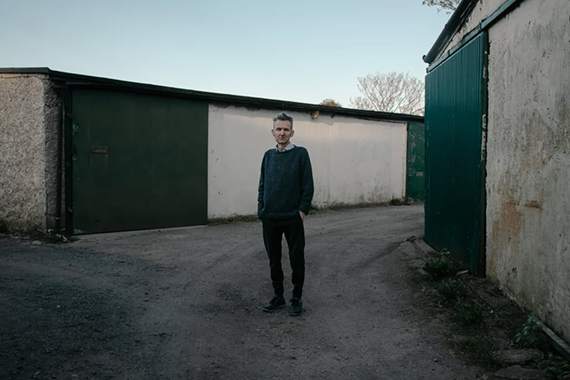
Ciara Richardson
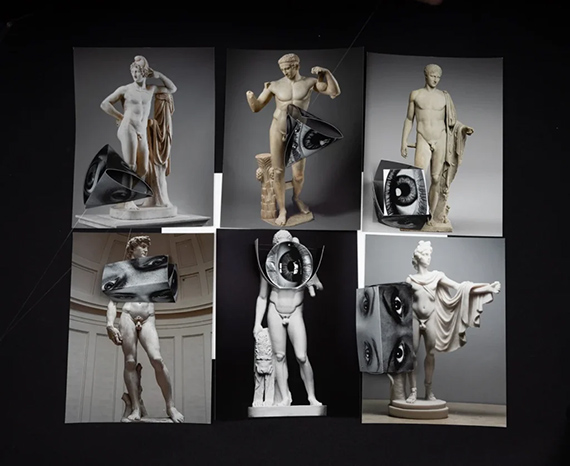
How would you like it to happen to you? is a playful yet critical reflection on the resurgence of traditional gender stereotypes within contemporary media. In spaces where men continue to project power unambiguously and women are objectified through the lens of physical appearance; this work seeks to subvert those narratives. By flipping conventional dynamics surrounding the male gaze, this work aims to provoke conversations around visibility, control, and objectification.
Utilizing found photographic imagery sourced from websites and Google Image searches, flat, two-dimensional representations are transformed into tactile, three-dimensional sculptural forms. Techniques include photomontage, moving automaton elements, and mechanical components — each element reinterpreting how images and bodies are viewed, interacted with, and controlled.
Historically, visual culture has reinforced unequal power dynamics, positioning men as active, desiring subjects and women as passive objects to be consumed. This manifests in close-ups of women’s bodies, lingering shots on isolated parts, and voyeuristic framing that prioritizes physical attributes. Simultaneously, male nudity in art often serves as a demonstration of anatomical mastery rather than objectification.
These anatomical sculptures endeavour to disrupt this balance. They reposition the gaze—questioning conventions of objectification, authorship, and control. Drawing inspiration from Dadaism, this work embraces rebellion, absurdity, and anti-establishment sentiment while introducing order within structured compositions. The automated mechanisms challenge dimensional boundaries, pulling sculptural form back into flatness, creating a cyclical tension between surface and volume.
Ciara Richardson is an Irish photographer working across collage and fine art sculpture photography, with ongoing experimentation in diverse media. Their practice explores social issues and how they shape human emotion and behaviour, with a strong focus on materiality and the manipulation of materials within photographic form. Collaboration is central, using photography as a participatory, investigative tool. Engaging themes such as climate change, globalisation, violence, and racism, Ciara prioritises ethical representation and privacy. Through layered visual narratives, they translate complex ideas into accessible, thought-provoking work.

Conn McCarrick Tomorrow’s Promise (working title) draws from Conn McCarrick ‘s family history and the traditions of vernacular photography to explore aspects of memory, loss, and aging. The work is set against the background of his father’s stage four cancer diagnosis, considering how this has affected our lives and family.
Challenging the familiar hierarchies of father-son relationships and the photographer-subject dynamic, ‘Tomorrow’s Promise’ is a diaristic, subjective account of this experience, rooted in an empathetic, contemplative approach, capturing everyday moments of joy, solace, and comfort. These ephemeral, fleeting moments now carry deep emotional weight.
Through this work, Conn hopes to encourage more conversations about care and what we want to remember about those we love, transforming something that is deeply personal into a more universal narrative.
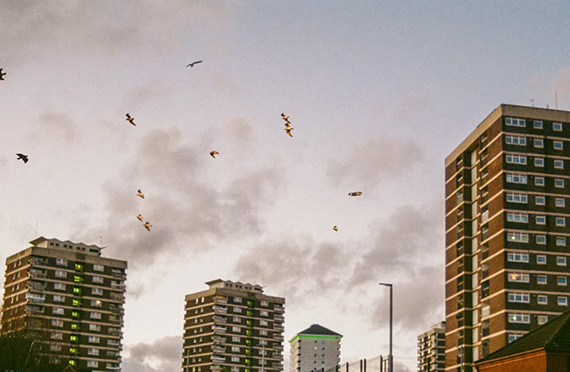
Evanna Devine : The Devine family ran several small businesses in North Belfast including a flower shop, a fruit- and-veg shop, and a café, serving their local community from the 1971 until 2015. These shops were not only a place of daily life, family, and connection, but also sites marked by sectarian violence, including several attacks and murder. Despite this, the Devine family continued to work, to serve, and to remain a steady presence of North Belfast.
When the shops closed in 2015, the family’s work did not end. Instead, it moved into the home. Bridal bouquets assembled at the kitchen table, funeral arrangements made in the shed, Christmas trees sold from the entryway. Mr. Devine still delivers fruit to local schools from his home. The values and resilience that defined the original shops remain, much like the memories, both cherished and traumatic, that were made there.
Simply Devine pairs archival photographs with new portraiture to explore how shared experiences, inherited trauma, and cultural identity shape the lives of ordinary people. The project seeks to create space for intergenerational dialogue and understanding of the past.
Evanna Devine is an Irish artist from Belfast, working primarily through photographic portraiture. Her practice centres on long-term, community-led storytelling, exploring themes of class and identity in contemporary Ireland.
She holds a First Class Honours degree in Photography from the Institute of Art, Design and Technology. Her first solo exhibition, It is Different for Mothers (2023), was developed in collaboration with Relatives for Justice and presented at Belfast’s Botanic Gardens. It responded to themes of legacy, motherhood and future generations. This experience reinforced her dedication to using photography as a tool for dialogue, remembrance and change.
At the heart of her practice is a passion for collaboration and a drive to tell important stories that often go unheard. Through photographic portraiture, she strives to capture the complexities of ideas of class, Irish heritage and identity in contemporary Ireland.
Finbar Flanagan The Places We Hide
His voice echoes numbers into silence.
As he seeks, some spaces conceal laughter; others reveal what was left behind.
Objects drift into view — ordinary things, displaced, preserved as if for evidence.
He hates them, but cannot throw them away.
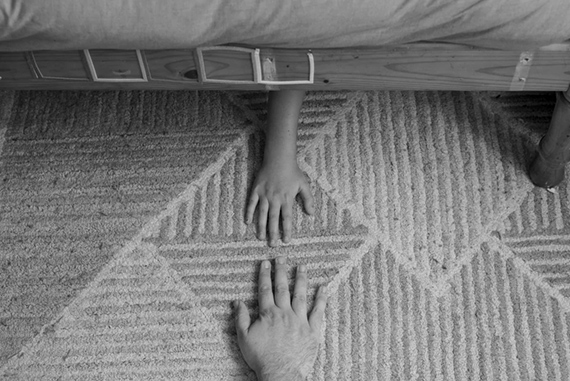
The children slip behind curtains, beneath fabric, into shadow.
As the father continues to search, what he finds is never only them.
Printed on thermal paper, each image holds for a moment before it begins to fade.
What remains is both play and rupture — a record of hiding and seeking that cannot last.
Finbar Flanagan ‘s work navigates the intimate terrains of home, identity, memory, and emotional experience. Rooted in the rural landscape of Blackwater in County Wexford, he uses photography and mixed media to explore personal narratives that resonate with wider human experiences. Drawing from his own life, his practice seeks to make visible that which is often internal and unseen, especially the roles, responsibilities, and emotional shifts of fatherhood and experiences of separation.
Through bodies of work such as Drifting, he blends visual imagery with conceptual frameworks to unpack the complex realities of lone parenthood, domestic life, and the psychological spaces between memory and presence. He is interested in how familiar environments and everyday objects can hold layered meanings, both comforting and unsettling, and how these layers can be brought forth through photography’s capacity to document, disrupt, and reinterpret reality.
In his practice, he also engages with techniques that challenge photographic norms, manipulating time, colour, and form to evoke emotional truths that are felt rather than merely seen. His work embraces ambiguity, invites reflection, and aims to forge connections with viewers through its honesty and conceptual depth.
He considers art not as representation alone but as an act of translation — from lived experience to visual form, from personal story to collective resonance. Through this translation, his work speaks to the universal threads of love, loss, resilience, and belonging.
In Human Waste, Jake Hughes continues his photographic exploration of his hometown of Keady, Northern Ireland, building on his previous project,The Destructive Comfort of a Thinking Machine. That earlier work examined the interplay of nature and concrete as a reflection of his comfort with home, revealing both safety and unease. While the familiar spaces offered psychological comfort, they also exposed tension, stagnation, and the subtle pressures of environment on mental wellbeing. The village itself became a mirror of his inner state, where the boundaries between security and decay were intertwined.
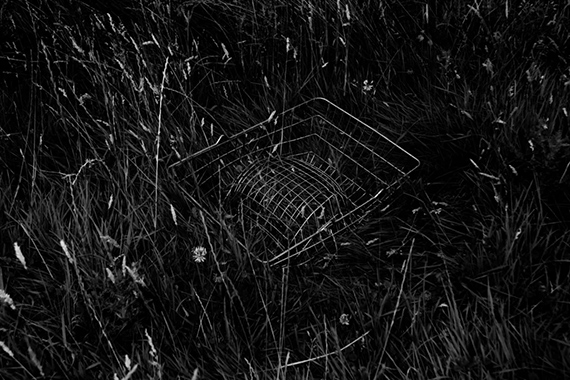
In Human Waste, the focus shifts outward, documenting neglect, litter, and the traces left behind on the environment and the animals that inhabit it. Photographed mostly at night, the images capture overgrown spaces, discarded materials, dead animals, and deteriorating structures. The absence of people heightens tension, while nature appears entangled with human disregard.
Through repetition and fragmentation, the work reflects cycles of observation and fixation. He invites viewers to see these scenes as reflections of human carelessness — how actions, or inactions, leave lasting traces on the world and on the psychological landscapes of those who inhabit it. The series asks audiences to consider their responsibility to the environments they occupy, and how even small acts of neglect accumulate over time, shaping both the physical and emotional contours of place.