TWO
Dawid » Gerry Johansson »
Exhibition: 2 May – 24 Jun 2026
Fri 1 May 18:00
Dorothée Nilsson Gallery
Potsdamer Str. 65
10785 Berlin
+49 (0)170-5470707
gallery@dorotheenilsson.com
www.dorotheenilsson.com
Wed-Sat 12-18
Gerry Johansson and Dawid
"TWO"
Exhibition: 2 May – 24 June, 2026
Opening: Friday, 1 May , 6-9pm
Dorothée Nilsson Gallery presents works by Gerry Johansson and Dawid, bringing together two key figures in contemporary photography from Sweden.
In the dialogue between the two artists, concerns such as space, society, and structure intersect with perception, time, and disruption – Johansson representing an analytical, distanced approach, and Dawid a phenomenological, more introspective one. While Johansson asks how the world is structured, Dawid focuses on how perception comes into being. Johansson reduces the world in his images in order to see it more clearly; by contrast, Dawid works with abstraction to reveal how uncertain our “seeing” is. Both artists share a long-standing conceptual practice, the use of reduction as a formal strategy, and a commitment to working in series.
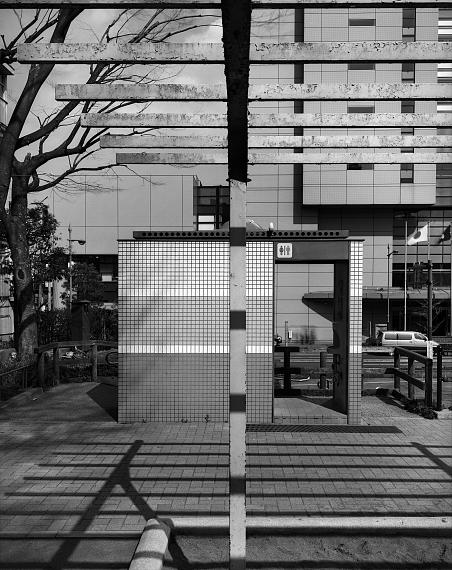
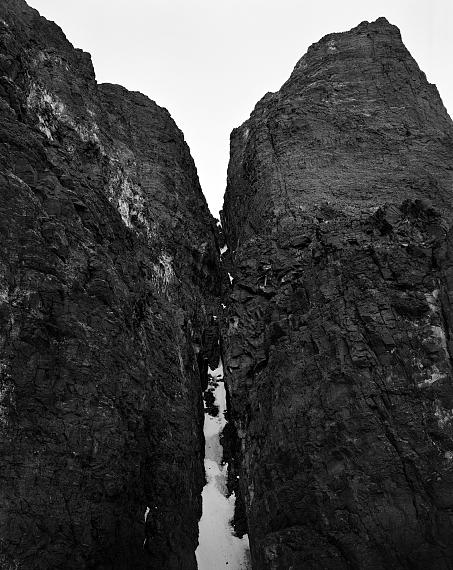
For the first time, works from the series ANTARKTIS (2001), photographed in large format, are now on view in Berlin. In these black-and-white photographs, Johansson presents a contemplative world of amorphous, sculptural forms, largely untouched by human hands and destined to disappear as a result of climate change. Nature here appears as something sublime, not merely a resource. The juxtaposition with a number of images from the series TOKYO (2004) makes clear how his works can be read: not as places in the conventional sense, but as recurring constellations of light, pattern, form, and structure.
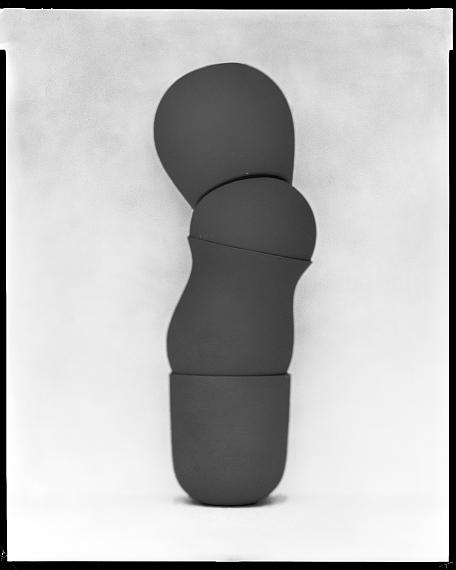
Dawid presents photographs from the series BUR (2009), OAS (2018), and ROD (2024). Here, the artist transforms the object into an open visual form. Photographed things lose their functional clarity and become open to reinterpretation by the viewer. Meaning emerges as a tentative process of recognition, shaped through the interplay of seeing and reflection.
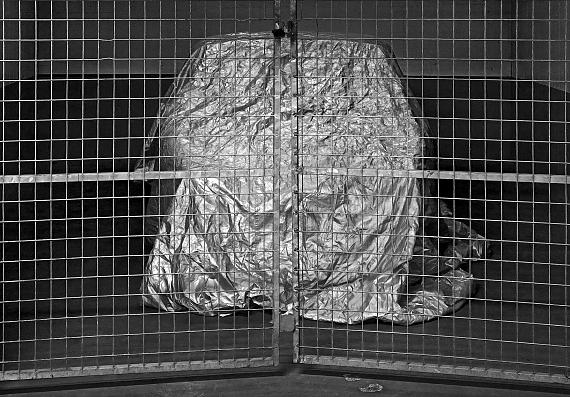
This is also evident in photographs from the series BUR (cage): automobiles stand covered in garages devoid of daylight behind bars. Here, a material object charged with desire is protected from decay and intrusion. In Dawid’s photographs, a formal construct emerges on the aesthetic level—a sculptural installation in which clarity and intention dissolve.
Gerry Johansson (*1945 in Örebro, lives in Höganäs) is considered one of the central Swedish figures of a conceptual, analytical photography that understands the medium as an instrument of thought. Since the 1980s, he has consistently pursued an artistic approach aimed at making the structures of the world visible through systematic observation. His works are developed in series and are often geographically defined.
Dawid (Björn Dawidsson, *1949 in Örebro, lives in Stockholm) is regarded as a formative representative of postmodern, conceptually expanded photography in Sweden. Early on, he developed an independent artistic stance that treats photography not as a depiction of reality, but as a medium for reflecting on perception, materiality, and the conditions of the image itself.
Gerry Johansson und Dawid
"TWO"
Ausstellung: 2. Mai bis 24. Juni 2026
Eröffnung: Freitag, 1. Mai , 18 - 21 Uhr
Die Dorothée Nilsson Gallery präsentiert mit Arbeiten von Gerry Johansson und Dawid zwei Schlüsselpositionen zeitgenössischer schwedischer Fotokunst.
Im Dialog der beiden Künstler treffen Ebenen wie Raum, Gesellschaft, Struktur auf Wahrnehmung, Zeit und Irritation – Johansson steht für den analytischen, distanzierten Zugang, Dawid für einen phänomenologischen, eher introspektiven Ansatz. Während Johansson fragt, wie die Welt strukturiert ist, fokussiert sich Dawid darauf, wie Wahrnehmung entsteht. Johansson reduziert die Welt in seinen Bildern, um sie klarer zu erkennen. Dawid arbeitet dagegen mit Abstraktion im Bild und zeigt, wie unsicher unser „Sehen“ ist. Gemeinsam ist beiden Künstlern eine langjährige, konzeptuelle Praxis mit Reduktion als Stilmittel und das Arbeiten in fotografischen Serien.
Erstmals in Berlin werden Exponate aus der Werkgruppe ANTARKTIS (2001) von Gerry Johansson ausgestellt, die im Großformat fotografiert wurden. Seine Schwarz-Weiß-Fotografien zeigen eine kontemplativ erscheinende Welt aus amorphen, von Menschenhand weitestgehend unberührten, skulpturalen Formen, die als Folge des Klimawandels verschwinden wird. Natur ist hier erhaben und nicht nur Ressource. Die Gegenüberstellung mit Johanssons Motiven aus Tokyo macht deutlich, wie diese Bilder gelesen werden können: nicht als Orte im klassischen Sinne, sondern als Gefüge von Strukturen.
Dawid zeigt Fotografien aus den Serien BUR (2009), OAS (2018) sowie ROD (2024). Der Künstler transformiert hier das Gegenständliche in eine offene visuelle Gestalt. Fotografierte Dinge verlieren ihre funktionale Eindeutigkeit und werden für den Betrachter neu interpretierbar. Die Deutung wird zu einem tastenden Erkennen aus der Verbindung von Sehen und Überdenken.
Diese Wirkung zeigt sich auch in der Serie BUR (Käfig): Automobile stehen verhüllt in tageslichtlosen Garagen hinter Gittern: ein emotional besetzter, materieller Gegenstand wird vor Vergänglichkeit und Übergriffen geschützt. In den Fotografien von Dawid entsteht auf der ästhetischen Ebene ein formales Konstrukt, in dem sich Eindeutigkeit und Intention auflösen.
Gerry Johansson (*1945 in Örebro, lebt in Höganäs) zählt in Schweden zu den zentralen Verfechtern einer konzeptuellen, analytischen Fotografie, die das Medium als Instrument des Denkens begreift. Seit den 1980er Jahren verfolgt er konsequent seinen künstlerischen Ansatz, die Strukturen der Welt durch systematisches Sehen sichtbar werden zu lassen. Seine Arbeiten entstehen in Werkgruppen und sind oft geografisch definiert.
Dawid (Björn Dawidsson (*1949 in Örebro, lebt in Stockholm) gilt als prägender Vertreter einer postmodernen, konzeptuell erweiterten Fotografie in Schweden. Früh entwickelte er eine eigenständige künstlerische Haltung, die Fotografie nicht als Abbild der Wirklichkeit versteht, sondern als Medium der Reflexion über Wahrnehmung, Materialität und die Bedingungen des Bildes selbst.