
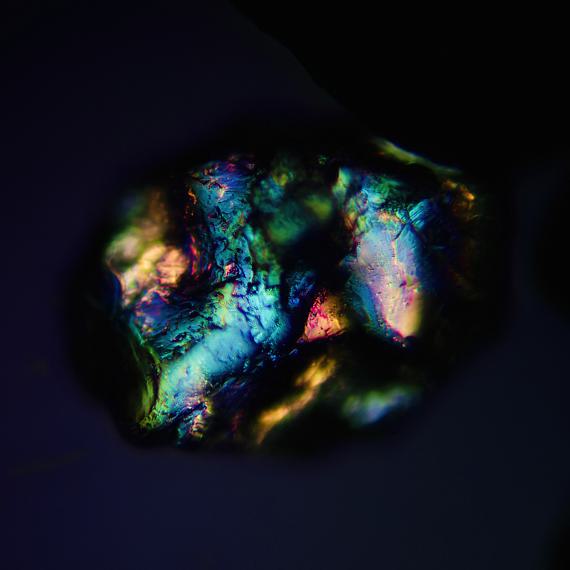
Faro, Portugal
60 x 60 cm
Inkjet-Print
© Matthias Burba
Seeing the World in a Grain of Sand
Die Welt in einem Sandkorn sehen
Alfred Ehrhardt » Matthias Burba & Max Seeger »
Exhibition: 11 Jul – 6 Sep 2026
Alfred Ehrhardt Stiftung
Auguststr. 75
10117 Berlin
+49 (0)30-20095333
info@aestiftung.de
www.aestiftung.de
Tue-Sun 11-18
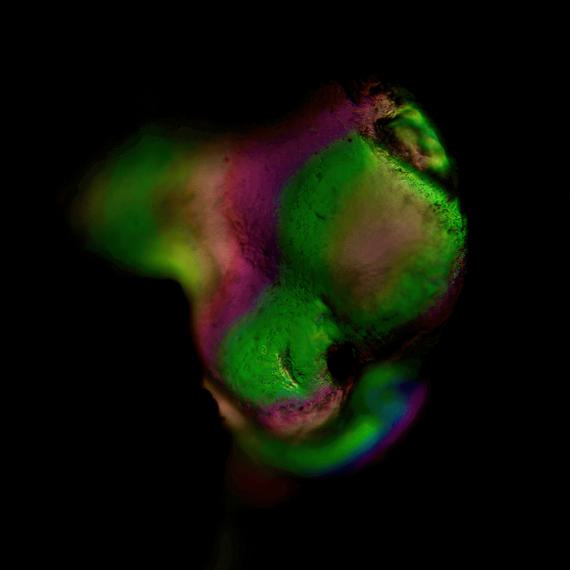
Nordstrand, Helgoland
60 x 60 cm
Inkjet-Print
© Matthias Burba
Matthias Burba & Max Seeger
"Seeing the World in a Grain of Sand"
Exhibition: July 11 – September 6, 2026
Opening: Friday, July 10, 7–9pm
The artists will be present
A forensic scientist turned photographer focuses on one of the most unassuming materials
in our environment. The exhibition Seeing the World in a Grain of Sand brings together the
photomicro graphic works of Matthias Burba (b. 1954), a synesthete, and an interactive
video work by Max Seeger (b. 1994), revealing sand as a multifaceted visual field. Between
microscopic precision, subjective perception, and media translation, the material is
rendered visible both as a geological archive and as a carrier of ecol ogical, cultural, and
historical processes.
Matthias Burba combines analytical precision with subjective memory. His approximately
800 sand samples, collected worldwide, form a visual archive that transcends mere
documentation. Using a polarizing microscope, he creates image compositions in which
light and filters are selectively employed to reveal specific color and structural
characteristics of sand grains. These features are not only aesthetically striking but also
provide clues to their mineral composition and allow conclusions to be drawn about their
respective origins.
The works depict sand grains not as neutral objects, but as complex formations whose
colors, structures, and light refractions evoke abstract painting. A geological archive
shaped by millions of years of weathering, movement, and transformation thus becomes
visible. The point of departure is a verse by William Blake (1757–1827), who conceives the
minute as a mirror of the vast—a notion translated here into a contemporary visual
practice.
Max Seeger’s participatory film Ingrained extends this perspective by adding a spatial
dimension. The installation shifts the focus from the individual grain to larger contexts.
Digital image spaces combine with documentary elements to reveals the material within its global interconnections.
form a visual narrative that
These artistic approaches to sand stand in stark contrast to its everyday use as a raw
material. As silicon dioxide, it is one of the most widely used resources on Earth and forms
a central basis for modern technologies and infrastructures. It is the raw m aterial for
microchips, smartphones, solar cells, and optical products, and at the same time
indispensable for construction processes, from concrete production to land reclamation
and coastal protection. However, sand is not a universally applicable materi al; its specific
properties determine its suitability for different applications.
With globally demand increasing, sand is becoming an increasingly scarce and contested
resource. Prices have risen by up to 6,500 percent over the past twenty extraction is causing significant environmental damage in many through the destruction of shorelines and beaches, while also years. Intensive regions , particularly exacerbating the threat to coastal areas posed by rising sea levels.
Accompanying events:
Saturday, July 18, 2026, 4pm
Saturday, August 8, 2026, 4pm
Thursday, September 3, 2026, 6pm
Guided tours of the exhibition with Matthias Burba and Dr. Christiane Stahl, Director of the Alfred Ehrhardt Foundation
Thursday, July 23, 2026, 7pm
»The fleeting image: Salt prints and nature reflected through time«
a slide lecture featuring original works by Joachim Froese
Thursday, August 13, 2026, 7pm
»Sand as a Medium: Materiality, Power, and Territorial Transformation«
lecture by Dr. Michaela Büsse, Research Associate, Dresden University of Technology
Thursday, August 27, 2026, 7pm
»Sand—Resource, Life, Longing. An exhibition at the Sinclair-Haus Museum«
slide presentation by Moritz Ohlig, curator at the Sinclair-Haus Museum in Bad Homburg
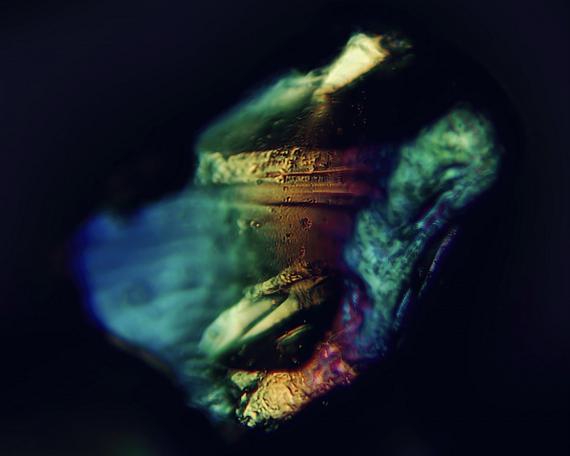
Cuxhaven-Döse, Wattenmeer
40 x 50 cm
Inkjet-Print
© Matthias Burba
Matthias Burba & Max Seeger
"Die Welt in einem Sandkorn sehen"
Ausstellung: 11. Juli bis 6. September 2026
Eröffnung: Freitag, 10. Juli 2026, 19–21 Uhr
In Anwesenheit der Künstler
Ein Forensiker als Fotograf, der sich einem der unscheinbarsten Materialien unserer
Umwelt widmet. Die Ausstellung "Die Welt in einem Sandkorn sehen" vereint die
mikrofotografischen Arbeiten von Matthias Burba (*1954), Synästhetiker, mit einer
interaktiven Videoarbeit von Max Seeger (*1994) und erschlieflt Sand als vielschichtiges Bildfeld. Zwischen mikroskopischer Präzision, subjektiver Wahrnehmung und medialer
Übersetzung wird das Material zugleich als geologisches Archiv und als Träger
ökologischer, kultu reller und historischer Prozesse sichtbar.
Matthias Burba verbindet analytische Präzision mit subjektiver Erinnerung. Seine rund
800 weltweit gesammelten Sandproben bilden ein visuelles Archiv, das über reine
Dokumentation hinausgeht. Am Polarisationsmikroskop entwickelt er Bildkompositionen, in denen Licht und Filter gezielt eingesetzt werden, um spezifische Farb- und Strukturmerkmale der Sandkörner sichtbar zu machen. Diese sind nicht nur ästhetisch
prägnant, sondern geben auch Hinweise auf ihre mineralische Zusammensetzung und
ermöglichen Rückschlüsse auf den jeweiligen Fundort.
Die Arbeiten zeigen Sandkörner nicht als neutrale Objekte, sondern als komplexe
Formationen, deren Farben, Strukturen und Lichtbrechungen an abstrakte Malerei
erinnern. Sichtbar wird ein geologisches Archiv, gepr‰gt von Millionen Jahren
Verwitterung, Beweg ung und Transformation. Ausgangspunkt ist ein Vers von William
Blake (1757–1827), der das Kleine als Spiegel des Großen begreift und hier in eine
zeitgenössische Bildpraxis überführt wird.
Mit der partizipativen Filmarbeit Ingrained erweitert Max Seeger diese Perspektive um
eine raumgreifende Dimension. Die Installation verschiebt den Blick vom einzelnen Korn
hin zu größeren Zusammenhängen. Digitale Bildräume verbinden sich mit dokumentarischen Elementen zu einer visuellen Erzählung, die den Stoff in seinen globalen Verflechtungen sichtbar macht.
Diese künstlerischen Annäherungen an Sand stehen in deutlichem Kontrast zu seiner
allt‰glichen Nutzung als Rohstoff. Als Siliciumdioxid zählt er zu den meistverwendeten
Ressourcen der Erde und bildet eine zentrale Grundlage moderner Technologien und
Infrastrukturen. Er ist Ausgangsmaterial für Mikrochips, Smartphones, Solarzellen und
optische Produkte und zugleich unverzichtbar für Bauprozesse, von Betonherstellung bis
hin zu Landaufschüttungen und Küstenbefestigungen. Dabei ist Sand kein universell
einsetz bares Material, seine spezifischen Eigenschaften entscheiden über seine
Verwendbarkeit.
Mit der global steigenden Nachfrage wird Sand zunehmend zu einer knappen und
umkämpften Ressource. In den vergangenen 20 Jahren sind die Preise um bis zu 6500
Prozent gestiegen. Der intensive Abbau führt vielerorts zu erheblichen ökologischen
Sch‰den, insbesondere durch die Zerstörung von Uferzonen und Stränden, und verschärft
zugleich die Gefährdung von Küstenregionen durch den steigenden Meeresspiegel.
Begleitende Veranstaltungen
Samstag, 18. Juli 2026, 16 Uhr
Samstag, 08. August 2026, 16 Uhr
Donnerstag, 03. September 2026, 18 Uhr
Führungen durch die Ausstellung mit Matthias Burba und Dr. Christiane Stahl, Direktorin der Alfred Ehrhardt Stiftung
Donnerstag, 23. Juli 2026, 19 Uhr
»Das flüchtige Bild: Salzdruck und Natur im Spiegel der Zeit«
Bild-Vortrag mit Originalen von Joachim Froese, Honorary Lecturer, School of Communication & Arts, University of Queensland Australien
Donnerstag, 13. August 2026, 19 Uhr
»Sand als Medium: Materialität, Macht und territoriale Transformation«
Vortrag von Dr. Michaela Büsse, wissenschaftliche Mitarbeiterin, Technische Universität Dresden
Donnerstag, 27. August 2026, 19 Uhr
»Sand – Ressource, Leben, Sehnsucht. Eine Ausstellung im Museum Sinclair-Haus«
Lichtbildervortrag von Moritz Ohlig, Kurator Museum Sinclair-Haus Bad Homburg
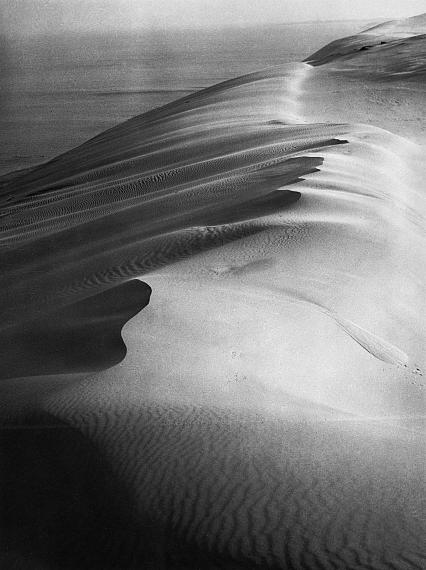
Dune Ridge, Curonian Spit, 1934
24,1 x 18,2 cm
Gelatin silver print
© Alfred Ehrhardt Stiftung
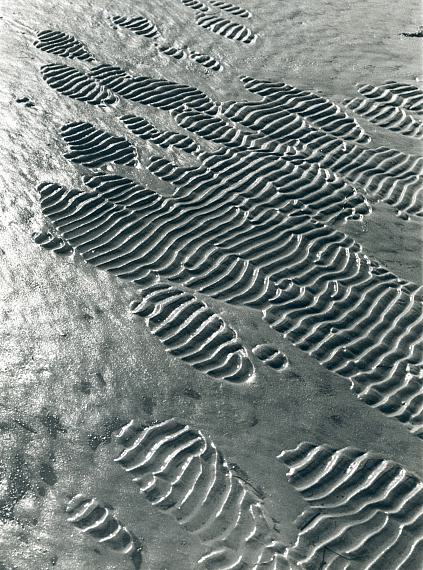
Structures in Sandy Soil, Mudflats
1933/36, later print
23,5 x 17,3 cm
Gelatin silver print
© Alfred Ehrhardt Stiftung