
Courtesy of the artist and Galería Alta.
GHANA!
Dreaming independence 1957–1976
Felicia Abban » Maame Abena Osaah Asamoah » James Barnor » Willis E. Bell » Denyse Gawu-Mensah » Carlos Idun-Tawiah » Rita Mawuena Benissan » Manuela Nebuloni » Postbox Ghana » Marc Riboud » Paul Strand » Efua T. Sutherland » & others
Exhibition: 6 Jul – 4 Oct 2026
Palais de l'Archevêché
35 Pl. de la République
13200 Arles

Les Rencontres de la Photographie
34, rue du Docteur Fanton
13200 Arles
+33 (0)4-90967606
March 6, 1957: after more than a century under British rule, Ghana, formerly the Gold Coast, celebrated its independence, driven by the determination of its leader Kwame Nkrumah and his political circle. As a key proponent of the Pan-African project, the country helped open the way toward political emancipation for the rest of sub-Saharan Africa. With this newfound freedom, complex times emerged, as Ghana had to build the structures of its state, assert its political authority within the context of the Cold War, and forge a collective identity.
Among the many economic, social and political challenges, redefining a distinct cultural and intellectual identity was at the heart of Ghana’s project of emancipation. Music, theater, dance, literature and the visual arts all took part in this dynamic, giving form to the recent experience of freedom.
Photography played a crucial role in shaping the image of the young nation, both within its borders and abroad. Banknotes, brochures, illustrated magazines, postcards, stamps and even textiles served as vehicles for this new national image. Proud of its early achievements and admired beyond its borders, Ghana sparked a wave of publishing activity in the early decades of independence, particularly in the 1960s and 1970s. The country’s image was thus analyzed, documented and celebrated in many forms across numerous photography books. Works such as the now-iconic Ghana: An African Portrait (1976) by Paul Strand, or The Roadmakers (1961) by American photographer Willis E. Bell and Ghanaian playwright Efua Sutherland, opened up new spaces of representation for the country and its people, far removed from colonial-era imagery.
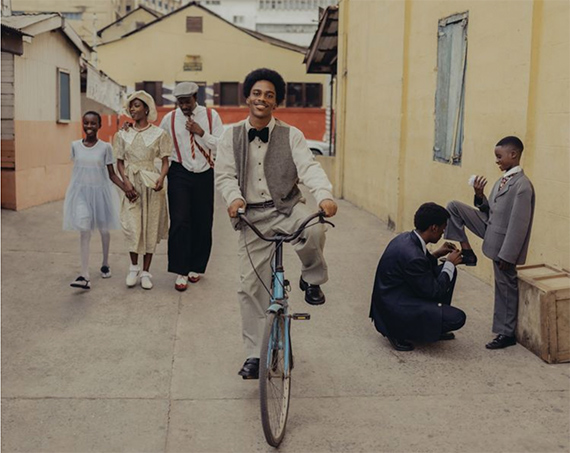
Ghana! Dreaming Independence explores this visual world, which flourished especially in books and more broadly in print culture during the early decades of independence. In dialogue, the contemporary artists featured in the exhibition examine and shed light on this visual legacy, which remains alive—between doubt, hope, and nostalgia—today.
Damarice Amao