
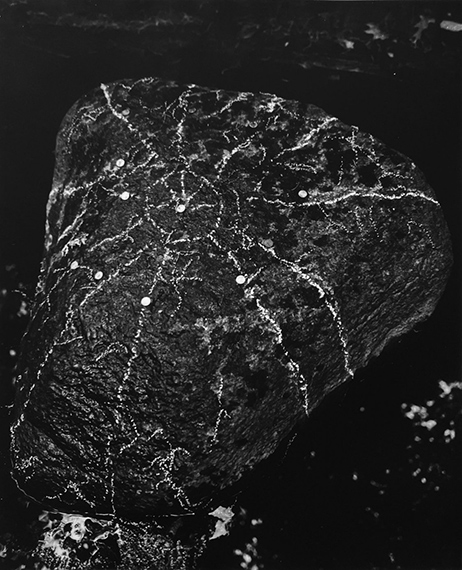
Courtesy of the artist & Petra Bibeau
Paris Photo 2026 - Voices sector
Sandra Brewster » Alessandro Calabrese » Louzla Darabi » Stefano Graziani » Guido Guidi » Lebohang Kganye » Dionne Lee » Annette Lemieux » Spandita Malik » Dimakatso Mathopa » Park McArthur » Domingo Milella » Zanele Muholi » Kenji Nakahashi » Mashudu Nevhutalu » Owanto » Evgeny Pavlov » Leonard Pongo » Ulrike Rosenbach » Silvia Rosi » Karan Shrestha » Jyrki Siukonen » Sergiy Solonsky » Gabriele Stötzer » Sebastian Stadler » Elena Subach » Ulay (Uwe Laysiepen) » Iwao Yamawaki » Krzysztof Zarębski »
Fair: 12 Nov – 15 Nov 2026
Wed 11 Nov

Paris Photo
7 avenue Winston Churchill
75008 Paris
+33(0)1-47565000
info@parisphoto.com
www.parisphoto.com
Wed 11-21 (VIP); Thu-Sun 10:30-13 (VIP); Thu-Sat 13-20; Sun 13-19

Courtesy of the artist & Kristof De Clercq Gallery
Launched in 2024, the Voices Sector is entrusted each year to guest curators, who develop a proposal around a specific theme. For its third edition, Zasha Colah and Francesco Zanot explore the Disappearance in a dedicated space within the nave.
The Disappearance
“As the Bicentenary of Photography approaches, the medium finds itself in a paradoxical position. Conceived, among other reasons, as a tool to preserve what would otherwise vanish, photography is now being celebrated at a moment when its own traditional form appears increasingly unstable, transformed, and challenged by processes that are altering its nature and status. This paradox is the curatorial starting point for this sector. Referring implicitly to the surviving image traditionally associated with photography’s origin, View from the Window at Le Gras, the project rethinks an anniversary that can also be read as a threshold: between commemoration and obsolescence, between mourning and re newal. In this sense, the history of photography becomes inseparable from the broader cultural, political, and material conditions of disappearance. The section investigates disappearance through multiple perspectives and tempo ralities. It brings together historical pieces produced to record subjects, places, and phenomena on the verge of vanishing, alongside contemporary practices that use pho tography to resist the marginalization of vulnerable communities, endangered lands capes, and fragile social realities. Other artists engage the notion of disappearance as a material process, creating works destined to alter, fade, or auto-destruct over time. Others push photography beyond its conventional boundaries by merging it with pain ting, sculpture, installation, or other languages and disciplines, to the point where the photographic image becomes barely recognizable. Particular attention is also given to practices shaped by algorithmic editing, software manipulation, and artificial intelli gence, where images retain a photographic appearance while increasingly severing their indexical relation to reality.” Bringing together historical and contemporary positions, as well as works ranging from straight photography to hybrid visual languages, the section reflects on disappea rance not only as a subject represented by photography, but as a condition increasingly affecting the medium itself.“
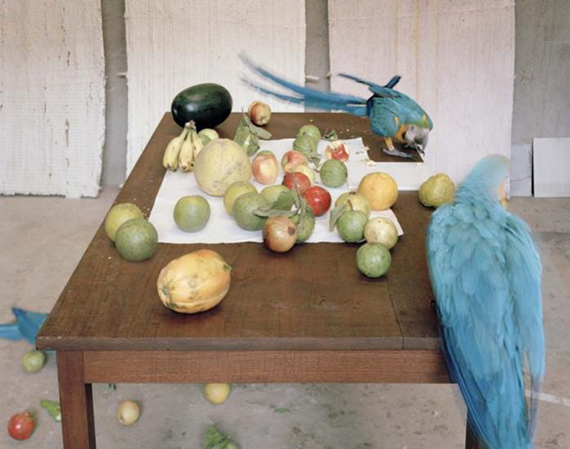
Courtesy of the artist & Galleria Mazzoli
Camilla Grimaldi, Rome* Domingo Milella »
Charim, Vienna* Ulay (Uwe Laysiepen) »
Ithaque, Paris* Louzla Darabi »
Kodoji, Baden* Sebastian Stadler »
Kristof De Clercq, Ghent* Léonard Pongo »
Petra Bibeau, New York* Dionne Lee » Park McArthur »
Mazzoli, Berlin* Stefano Graziani » Annette Lemieux »
Tak Contemporary, Paris* — Duo Show Spandita Malik » Karan Shrestha »
Viasaterna, Milan — Duo Show Alessandro Calabrese » Guido Guidi »
AFRONOVA, Johannesburg Owanto » Dimakatso Mathopa » Mashudu Nevhutalu »
Alexandra de Viveiros, Paris Evgeny Pavlov » Sergiy Solonsky » Elena Subach »
Gisela Clement, Bonn* & Monopol, Warsaw* Gabriele Stötzer » Ulrike Rosenbach » Krzysztof Zarębski »
Miyako Yoshinaga, New York Kenji Nakahashi » Jyrki Siukonen » Iwao Yamawaki »
Southern Guild New York* Sandra Brewster » Lebohang Kganye »
Zanele Muholi »
Silvia Rosi »
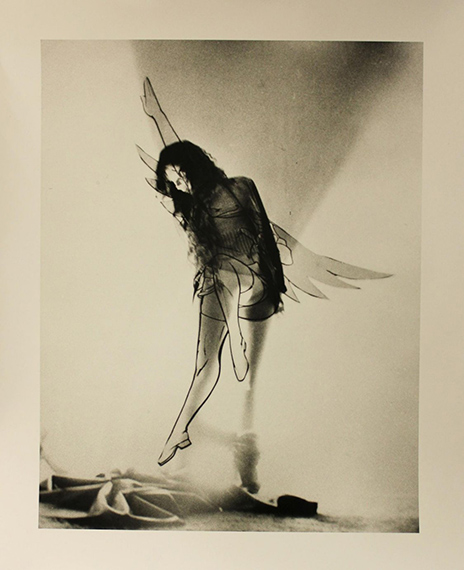
Courtesy of the artist & Galerie Gisela Clement