
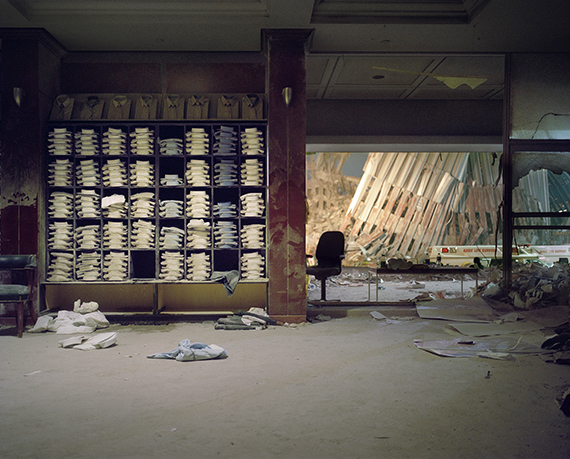
Brooks Brothers, WTC, 2001
Digital Pigment Print
Ed. of 10
69.6 x 86.2 cm (75.3 x 91.6 cm)
© Sean Hemmerle
Paris Photo 2026 - Group
Oliver Abraham » Erwin Blumenfeld » Paul Citroen » Jaromír Funke » Sean Hemmerle » Lisette Model » Jaroslav Rössler » August Sander » Josef Sudek »
Fair: 12 Nov – 15 Nov 2026
Wed 11 Nov
Paris Photo
7 avenue Winston Churchill
75008 Paris
Wed 11-21 (VIP); Thu-Sun 10:30-13 (VIP); Thu-Sat 13-20; Sun 13-19

Galerie Julian Sander
Bonner Str. 82
50677 Köln
+49 (0)221-170 50 70
galerie@galeriejuliansander.de
www.galeriejuliansander.de
Wed-Fri 10-18, Sat 12-16 + b.a.
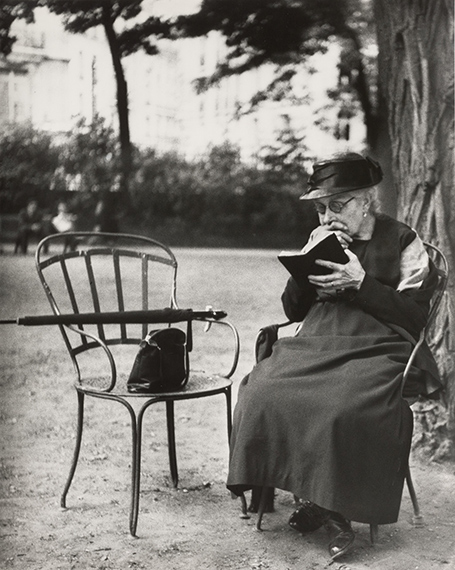
Bois de Boulogne, Paris, 1933-1938/
printed by Gerd Sander 1976-1981
Gelatin silver print on Agfa paper
50.1 40.2 cm (50.6 40.8 cm)
© Estate of Lisette Model, baudoin lebon
PARIS PHOTO 2026
Nov 12 – Nov 15, 2026
BOOTH D20
At this year’s Paris Photo, Julian Sander presents works by Lisette Model and August Sander, alongside photographs by two of the gallery’s contemporary artists: Cologne-based photographer Oliver Abraham and American photographer Sean Hemmerle.The presentation is complemented by selected works by other photographers, including Erwin Blumenfeld, Paul Citroen and representatives of the Czech avant-garde, such as Jaromír Funke, Josef Sudek and Jaroslav Rössler. Connoisseurs of classical photography will find just as much to appreciate as collectors of contemporary photographic art. As the names of several of the artists suggest, the exhibition focuses on the photographic portrait.
August Sander is represented by a number of exceptionally rare vintage and lifetime prints, distinguished by their outstanding print quality and excellent state of preservation. These include his famous Konfirmandin (Confirmand), Werftarbeiter (Shipyard Workers) and an expressive portrait of the painter Otto Dix. All these photographs belong to his extensive series People of the 20th Century, conceived as a systematic photographic documentation of the society in which he lived. This magnum opus underpins Sander’s standing as one of the most important photographers of the twentieth century, whose work continues to resonate today.
Sander’s intense commitment to portraying people with authenticity also served as an inspiration for the work of Lisette Model. A striking close-up of a singer in the throes of an ecstatic performance at Café Metropole, New York (c. 1946) opens our presentation. The focus then shifts, in keeping with the Parisian setting of the fair, to Model’s early work from the 1930s, created in the French capital and on the Côte d’Azur. In her direct, unvarnished portraits, Model repeatedly turns her gaze towards the so-called “little man”, as well as towards people with disabilities and those living on the margins of society. Sander’s Blind Children finds a counterpart in Model’s Blind Man in Front of Billboard, Paris, also taken in the 1930s.
For some visitors to the fair, encountering Lisette Model’s work may feel like a reunion. Several of the large-format prints on display, produced by Gerd Sander in close collaboration with the photographer during the 1970s and 1980s, were most recently shown in two major retrospectives of her work: at the Albertina in Vienna and at the Kunstfoyer of the Versicherungskammer in Munich. These works thus come with an outstanding exhibition history.
In both subject matter and form, Sean Hemmerle’s series Them bears a strong affinity to August Sander’s work. It comprises portraits taken in Afghanistan and Iraq following the US invasions of 2001 and 2003. Like Sander, Hemmerle uses the professions of his sitters as the titles of his photographs. In his black-and-white prints, he portrays them frontally in their personal surroundings. Through these empathetic portraits, Hemmerle rescues people living amid destruction and deprivation from the anonymity of war reporting. “Them” become individuals with faces and personal stories: an engineer, a student or a teacher, each meeting us, the viewers, on equal terms.
Preceding these portraits in the sombre chronology of events is the equally striking and surreal photograph Brooks Brothers, WTC, taken by Hemmerle on 11 September 2001 inside the eponymous clothing store, located in the immediate vicinity of the World Trade Center. The US government subsequently invoked the terrorist attacks of that September, twenty-five years ago, to justify its military interventions in Afghanistan and Iraq.
Oliver Abraham’s work also has a distinctly socio-political dimension. He is represented by his series Freedom of Speech, which he has been developing continuously for more than twenty years. The series comprises portraits of journalists, writers, artists, philosophers and activists whose work engages with freedom of the press and freedom of expression, surveillance and repression, and who take a clear stand on these issues. Abraham regards his striking black-and-white portraits—created using analogue large-format photography and featuring figures such as Stéphane Hessel, Édouard Louis, and journalists Ewen MacAskill and Miao Zhang—not merely as authentic representations of the people portrayed, but also as political documents.
On 17 November, August Sander would have celebrated his 150th birthday. To mark the occasion, our gallery in Cologne is presenting not only his portraits but also his architectural and landscape photographs in a three-part exhibition series. Portraiture was by no means the only genre in which Sander demonstrated his mastery of the medium. He pursued landscape photography with great dedication, producing images that, in the words of Olivier Lugon of the University of Lausanne, “certainly rank among the masterpieces of the landscape genre in 20th-century photography”. A small selection of Sander’s finest landscape photographs is also on view in Paris. His 1936 photograph of Der Stadtwald zu Köln im November (Cologne’s Forest in November), the woodland lying peacefully beneath a blanket of snow, reveals not only his mastery of the medium but also the full charm of a finely nuanced vintage print from the interwar period.
Sander’s landscapes are juxtaposed with Sean Hemmerle’s large-format photographs from his series Hoops, created in Cologne some eighty years later. Hemmerle took the first photograph in this extensive series, documenting basketball courts around the world, during his stay in Iraq in 2003. His images celebrate the basketball hoop as an international cultural phenomenon that transcends borders, languages and religions—a universal symbol of solidarity, community and fair play that endures worldwide, irrespective of geopolitical upheavals, resistance and crises. Against a backdrop of continuing unrest and conflict, the relevance of Hemmerle’s artistic approach is particularly striking.
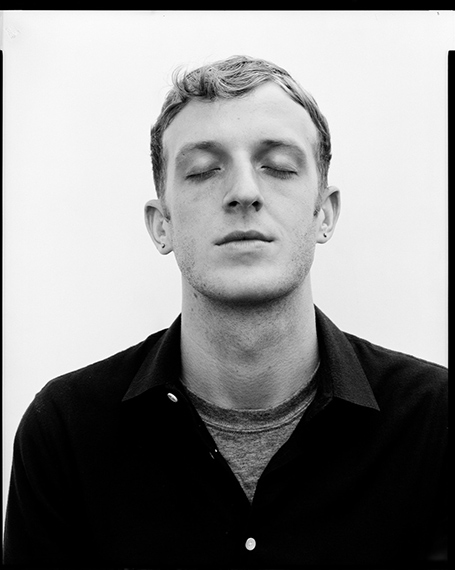
Edouard Louis, writer, 2019
Gelatin silver print
Ed. of 6
60x80 cm
© Oliver Abraham
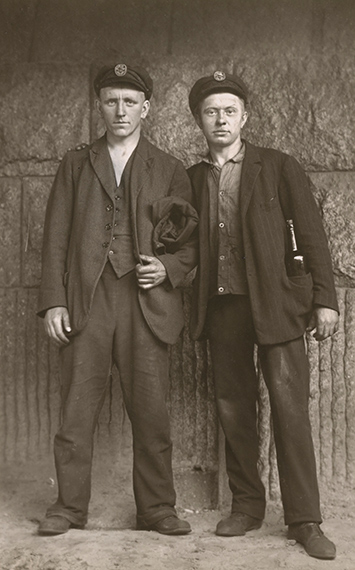
Werftarbeiter, 1929
Vintage gelatin silver print
26x15 cm (44x34 cm)
© Die Photographische Sammlung / SK
Stiftung Kultur – August Sander Archiv, Köln:
VG Bild-Kunst, Bonn 2026