
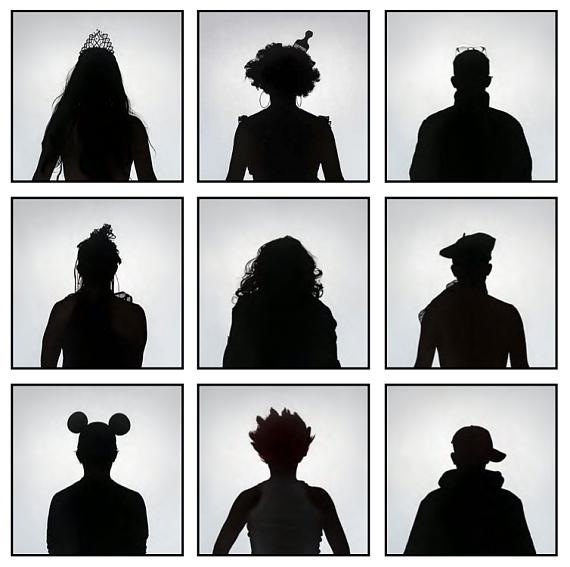
FuturoSEXtraños, 2017
b/w-inkjet prints
Each 41.9 x 41.9 cm
© Juan Pablo Echeverri
Paris Photo 2026 - Group
Booth B22 & D24
Viktoria Binschtok » Juan Pablo Echeverri » Felipe Romero Beltrán » Adrian Sauer »
Fair: 12 Nov – 15 Nov 2026
Wed 11 Nov
Paris Photo
7 avenue Winston Churchill
75008 Paris
Wed 11-21 (VIP); Thu-Sun 10:30-13 (VIP); Thu-Sat 13-20; Sun 13-19

KLEMMS
Leipziger Str. 57/58
10117 Berlin
+49-(0)1772144395
info@klemms-berlin.com
www.klemms-berlin.com
Wed-Sat 12-18
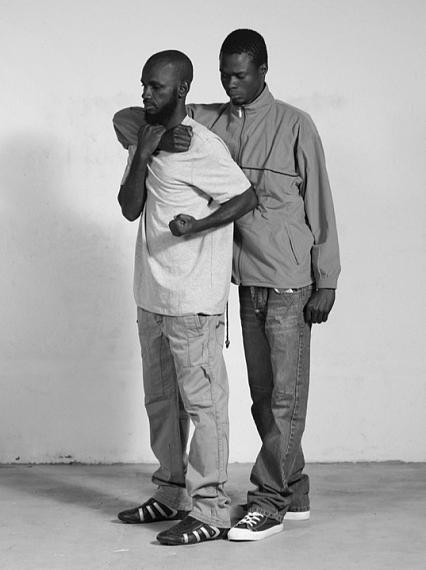
Reducción #1, 2019
black & white satin print
39 × 51 cm
© Felipe Romero Beltran
BLACK’N’WHITE?
Black & White? – .... deliberately put with a questionmark ... the presentation brings together new and current work by Viktoria Binschtok, Felipe Romero Beltran,
Juan Pablo Echeverri and Adrian Sauer – juxtaposing their specific take on one of the
distinct 'modus operandi' of the medium itself with a shared interest into societal ongoings
and the impact our visual culture has on an increasingly biased discoursive climate.
Felipe Romero Beltrán (b. 1992, Bogotá) is a Colombian artist based in Paris and Madrid,
working with photography, video and installation. His practice sits at the edges of documentary photography. He borrows its tools (long-term engagement with a place and its people, close attention to real social conditions) and
sets them against staging, performance and choreography drawn from painting, theatre
and cinema. The result is an image that feels both observed and constructed. It never
quite settles into document or fiction, and it asks the viewer to question how photographs
claim to represent reality.
Juan Pablo Echeverri (1978 – 2022) made the human body and face — usually his own,
gussied up or dressed down, photographed, videotaped, and made unrecognizable — the
beginning and end of all his art. Even as a teenager, the multimedia artist was in the habit
of taking daily pictures of himself, documenting how outward appearance conveys inner
transformation. In his practice, Echeverri used cleverly selected props such as piercings, wigs, makeup, and
costumes to explore stereotypes and cultural codes. His performances ran the gamut from
the subtle to the overly affected, and his characters often dangled between comedy and
existential seriousness. Echeverri’s oeuvre consists of a progression of clearly demarcated
cycles of images with each cycle being both visually distinctive and endowed with a surprising formal stringency. Echeverri acted as a collector of personalities – and hrough their sheer quantity and diversity, these "adopted" personas demonstrate that both 'norm' and 'deviation' are merely social constructs. Echeverri’s play with cultural stereotypes masks a deeper intent. His
characters oscillate between subtle hints and bold, exaggerated personae, existing in the
tension between comedy and existential seriousness.
Adrian Sauer (b. 1976, Berlin) examines the conditions of photography in
terms of its modes of creation, its functionality, and its interpretation. In the tradition of
analytical photography, he develops his work in a multifaceted and extremely precise form of
expression that encompasses photographic images and objects, graphic three-dimensional
forms, and essayistic text and sound installations. For many years, Adrian Sauer has been exploring the medial properties of digital images in a variety of ways. With precise virtuosity, he creates formally reduced, at times mysterious
works and groups of works that, with elegance and often with subtle humor, encourage a
close look. Sauer focuses on the individual components of the image-creation process
itself: production and reception are considered together. His fundamental interest lies in
exploring the structures that make an image “recognizable” today. The distinctive character
of his images is determined by the processual nature of their aesthetics. They can be perceived as fluid structures; as something that evolves from the realistic effect of photography,
through the process of digital editing, to a painterly effect, with the emphasis on the pheno-
mena he creates.

Digital semiotics (high five), 2025 C-print
100 x 80 cm
© Viktoria Binschtok