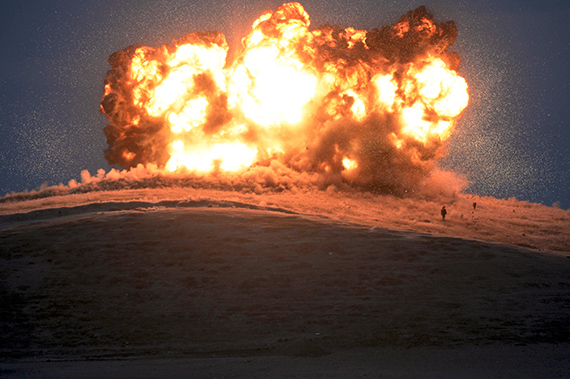
Shortly before I took this photo, I learned that a strategic hill on the Turkish-Syrian border had been taken from Kurdish fighters by Islamic State militants. The war between Islamic State and Kurdish fighters was continuing at full speed. We positioned ourselves right across from this strategic hill that had been taken, and I remember saying to my cameraman friend, "Just think about what if the coalition air force hit the hill right now." Yes, a few seconds after I said that, a fighter jet from the American air force hit the very hill. This was a difficult photo to take, but you decide whether it was heaven or hell. The fact that the militants of an organization that killed thousands of people, kidnapped women, and committed great crimes against humanity were hit with a mini atomic bomb, left my emotions in limbo. Islamist militants believe that they will go to heaven when they die in war. What I saw was that they lived hell in this world.
US air forces hit the position of Islamic State (IS) members as one of them standing next to the explosion at the Turkish Syria border next to Syrian border city of Kobane on October 23, 2014.
Inferno & Paradiso
20 photojournalists, 40 photographs
Samar Abu Elouf » Lynsey Addario » Motaz Azaiza » Véronique de Viguerie » Maxim Dondyuk » Abdulmonam Eassa » Donna Ferrato » Johanna-Maria Fritz » Alfredo Jaar » Olivier Jobard » Bulent Kilic » Alice Martins » Lorenzo Meloni » Finbarr O’Reilly » Darcy Padilla » Pablo E. Piovano » Hannah Reyes Morales » Lindokuhle Sobekwa » Brent Stirton » Anastasia Taylor-Lind » Laetitia Vançon »
Exhibition: 26 Jun – 1 Nov 2026
Thu 25 Jun 18:00
PHOTO ELYSEE
Place de la Gare 17
1003 Lausanne
+41(0)21-3169911
Wed-Mon 10-18, Thu 10-20
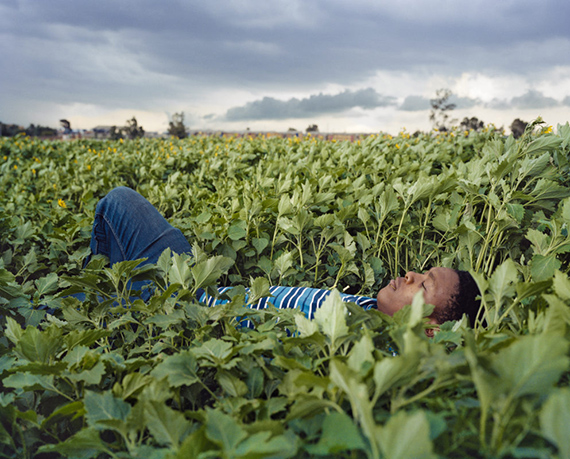
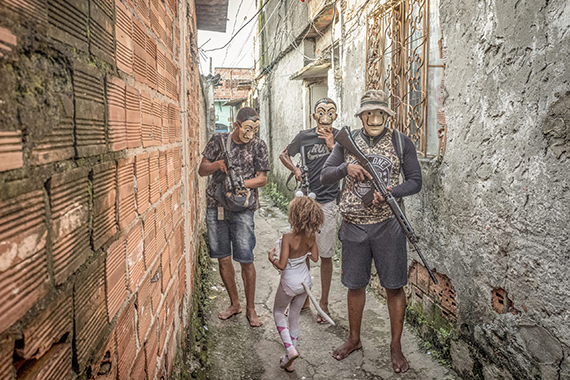
South Africa. Johannesburg, Thokoza, Sanele resting in field. 2021
from the exhibition Inferno & Paradiso by Alfredo Jaar
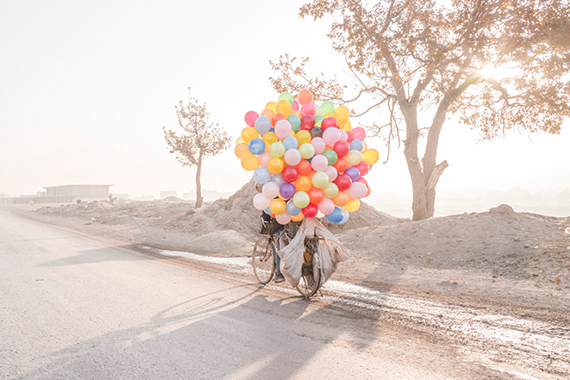
Inferno & Paradiso is an immersive slide-projection exhibition created by Alfredo Jaar, one of the most socially active artists of our day. For this show, Jaar selected 20 contemporary reportage photographers and asked each of them to choose two images from their archives – the most painful one they had taken and the most hopeful one.
Like Virgil in Dante’s Divine Comedy, Jaar takes us on a journey through heaven and hell, confronting us with our own (in)sensitivity in the face of the relentless flow of images of human suffering.
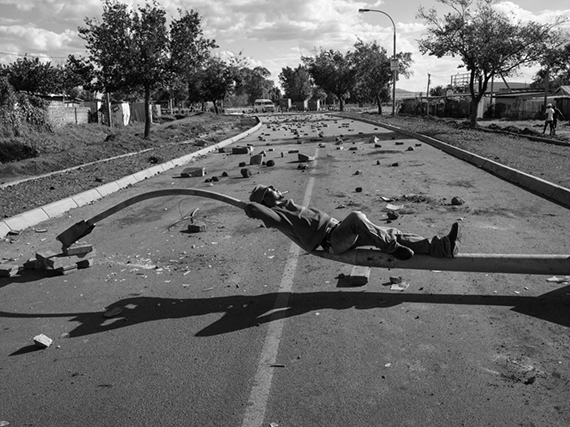
South Africa. Johannesburg, Thokoza, After a protest related to continuous power cuts during lockdown level 5 in Thokoza, 2020
from the exhibition Inferno & Paradiso by Alfredo Jaar
Inferno & Paradiso presents 40 photographs taken by 20 press photographers selected by Jaar for their ability to distill the complexity of humankind in the modern era. From Ukraine to Argentina, Gaza to New York, and the Congo to the Philippines, the photographers document many of the crises afflicting our society; but they also capture the joy and happiness inherent in our world. It is that dichotomy – a world caught between heaven and hell – that underpins this project.
Exhibition visitors enter a darkened room where the images are projected in 20-minute cycles: all the images relating to heaven are projected simultaneously, and then all the images relating to hell are shown. Visitors are thus swept up in each of the two themes for 20 minutes at a time.
Inferno & Paradiso is an immersive experience that confronts visitors with the emotions elicited by images of joy and pain. It embodies Jaar’s contention that photography has not lost its impact in today’s image-saturated society.
This exhibition, first shown in Cortona in 2025, attests to the breadth of Jaar’s artistic practice and his penchant for interrogating the power dynamics and social and political schisms brought about by capitalism and globalization. It delivers an exacting and piercing look at the role of photography and the media in contemporary society – and at the responsibility held by those pulling the levers.
The exhibition was co-produced with the nonprofit On The Move for the Cortona On The Move international photography festival.
Curators: Paolo Woods and Kublaiklan.
Alfredo Jaar (b. 1956) is a Chilean artist, architect and filmmaker who now lives and works in Lisbon after spending over 40 years in New York. He is considered one of our era’s most culturally, politically and socially committed artists. In 1994, he traveled to Rwanda to witness the genocide firsthand – an experience that radically changed his life and his artistic practice.
Jaar has exhibited around the world, including at the Venice Biennale (1986, 2007, 2009 and 2013), at documenta in Kassel (1987 and 2002) and at the Rencontres d’Arles (2013). He has been the subject of over 80 solo shows, including at the Musée cantonal des Beaux-Arts (MCBA) in Lausanne in 2007. Jaar won the Hasselblad Award in 2020, the IV Premi Mediterrani Albert Camus in 2024 and the Prix Pictet in 2025.
His works are held in the Museum of Modern Art (MoMA) and the Solomon R. Guggenheim Museum in New York; the Art Institute of Chicago; the Museum of Contemporary Art, Los Angeles, and the Los Angeles County Museum of Art; Tate Modern in London; the Centre Georges Pompidou in Paris; the Museo Nacional Centro de Arte Reina Sofía in Madrid; the Museo nazionale delle arti del XXI secolo (MAXXI) and the Museo d’Arte Contemporanea di Roma (MARCO) in Rome; the MCBA in Lausanne; and numerous other museums and private collections around the world.
The exhibition is accompanied by a book of the same name, Inferno & Paradiso, published by L’Artiere.
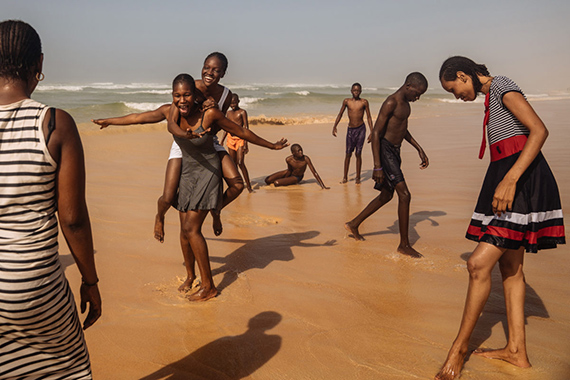
University students are seen hanging out in the afternoon in Yoff Beach, Dakar, Senegal. With a median age of 19, Africa is the continent with the world's youngest population. 70% of sub-Saharan Africa is under the age of 30, and by 2030, young Africans are expected to constitute 42% of global youth. As the demographic shift presents an opportunity for growth in the region, young people continue to navigate complex challenges - while taking an active role in shaping their future.
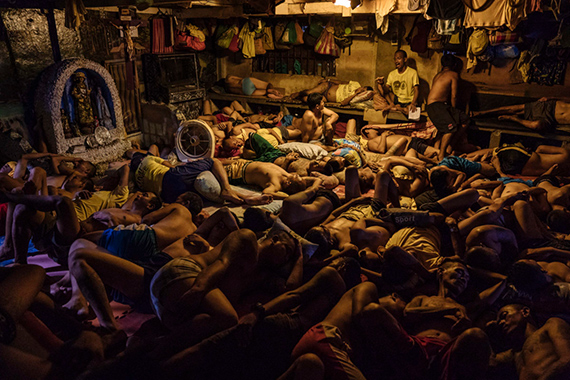
Detainees are seen sleeping by a small grotto of Mary in the Manila City Jail in Manila, Philippines on October 31, 2018. In the Philippines, men with pending cases spend months, sometimes years, in overcrowded cells waiting to be charged, sentenced, or tried.